Celebrating 45 Years of clinical innovation, comfort, and caregiver support at Broda.
Explore the Legacy!Choosing a commode chair with wheels is not simply a matter of selecting the most attractive model. The right chair should match the user’s mobility, balance, transfer ability, body size, and bathroom layout. A nurse, occupational therapist, or medical equipment specialist can provide valuable guidance, especially when falls are a concern. Personal experience also matters. A chair that feels stable beside a bed may be difficult to steer across thick carpets.
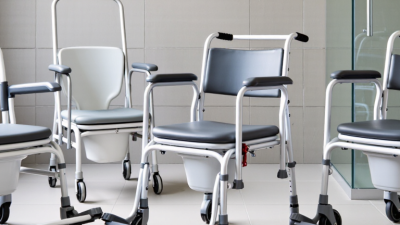
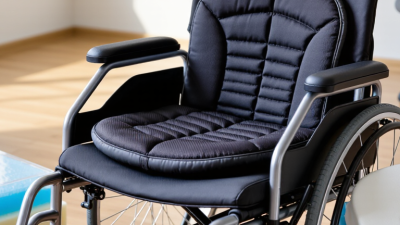
Begin by checking the frame, seat width, weight capacity, and height adjustment range. Strong locking casters are essential. Test whether the brakes engage firmly without excessive hand strength. The footrests should swing away or remove easily during transfers. A padded seat may improve comfort, but smooth, waterproof surfaces are often easier to clean after repeated use. Small details matter.
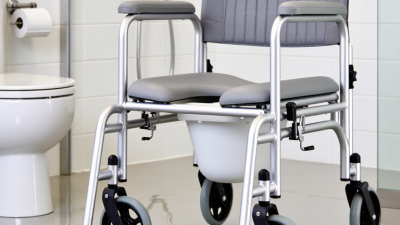
Measure doorways, hallway turns, and the space beside the toilet. Many buyers overlook these measurements. That can make a suitable chair unusable at home. Consider whether the commode chair with wheels will be used over a toilet, beside a bed, or as a shower chair. Each purpose may require different clearance and materials.
Reliable product information should include testing standards, cleaning instructions, warranty terms, and replacement-part availability. Do not depend only on online ratings. Some reviews lack useful measurements or long-term details. Ask a healthcare professional to assess posture, transfer safety, and pressure risks. Comfort is important, but safe movement comes first. Even careful choices may need adjustment after real use. A trial period can reveal problems that specifications cannot show.
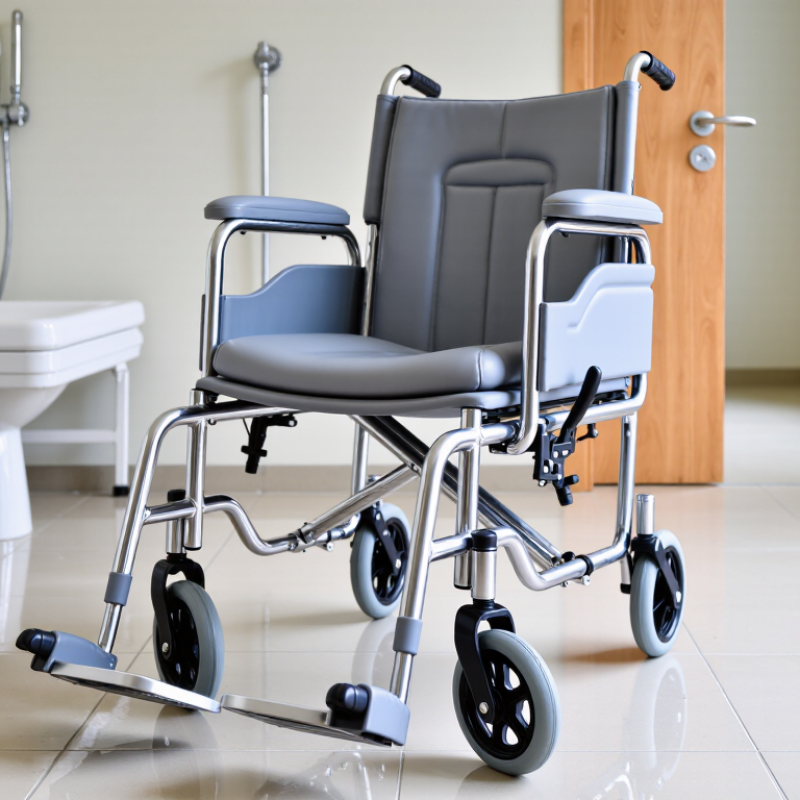
A wheeled commode chair should fit the user, not merely the bathroom. Measure hip, knee, and ankle positions while the person sits upright. Aim for hips, knees, and ankles near 90 degrees. This position supports balance and reduces sliding during transfers. Seat width should leave little side-to-side movement, but never press the hips. Seat height must let both feet rest firmly on the floor or foot supports.
The World Health Organization reports that more than 2.5 billion people need assistive products worldwide. That figure may reach 3.5 billion by 2050. Proper fitting is therefore a clinical concern, not a comfort detail.
The CDC reports that over three million older adults receive emergency treatment for fall injuries annually. Locking casters, stable arm supports, and predictable braking matter. Test the chair on the actual bathroom floor. Wet tiles can expose weaknesses quickly.
Tips: Measure the user’s seated hip width, knee height, and lower-leg length. Check clearance around the toilet and doorway. Ask a physiotherapist to observe one transfer. A 90-degree posture is a useful target, not a rigid rule. Some users need a slightly different angle because of pain, weakness, or limited movement. Do not ignore small discomforts. They often become transfer problems later.
Choosing a commode chair with wheels starts with the seat, not the frame. The wrong dimensions can cause pressure, sliding, or difficult transfers. Measure the user while seated, if possible. Record hip width, thigh length, and lower-leg height. A caregiver or occupational therapist can improve measurement accuracy.
Seat width should support the hips without squeezing them. Add a small clearance on both sides, usually about 2–5 cm. Too much space may reduce stability. Seat depth should support most of the thighs, but leave roughly 3–5 cm behind the knees. Excess depth can press into the legs and encourage poor posture. It sounds minor. It is not.
Many commode chairs have a seat height between 43 and 48 cm. This range suits many adults, but body proportions matter more than the label. Measure from the floor to the back of the knee while wearing normal footwear. The feet should rest firmly, and the knees should remain near hip level during transfers. A higher seat may help someone with weak knees, while a lower seat may suit shorter users. Wheels, cushions, and uneven floors can change the final height. I have seen a carefully measured chair become too tall after adding a thick cushion. Recheck the complete setup. Also confirm that the seat is wide enough for clothing and safe repositioning, but not so wide that the user leans sideways. Wheel locks should engage securely before every transfer.
How to Choose a Commode Chair With Wheels?
A wheeled commode chair must match the user, not just the bathroom. Check the stated safe working load against the user’s body weight, clothing, cushion, and removable accessories. Leave a practical margin. A close match may fail after repeated transfers. ISO 21856:2022 provides general requirements and test methods for assistive products. It does not replace product-specific safety evidence or professional assessment. Ask for test documentation covering load performance, frame stability, wheel attachment, and brake function.
Tips: Lock every wheel before transfer. Test both rear brakes. Push the empty chair slowly. Then test it with weight. Check for frame flex, loose bolts, and uneven movement. Small details matter.
The frame should remain stable when the user sits, turns, or rises. Look for clear information about materials, corrosion resistance, maximum load, and maintenance intervals. Brakes should engage firmly without excessive hand force. This matters for users with weak grip. WHO and UNICEF reported in the Global Report on Assistive Technology 2022 that more than 2.5 billion people need at least one assistive product worldwide. Demand is growing, but product information is not always equally clear. A therapist or qualified assessor can verify transfer height, seat width, and bathroom clearance. Still, professional advice is not infallible. Recheck the chair after delivery and during routine use. A specification sheet can miss real-world floor conditions.
| Evaluation Dimension | Verification Point | Profile A | Profile B | Profile C | Profile D | Recommended Check | Result |
|---|---|---|---|---|---|---|---|
| Intended Use | Use environment stated in the instructions | Indoor toileting and showering | Indoor toileting only | Indoor use with limited outdoor transfer | Indoor toileting and showering | Confirm that the intended environment matches the user’s needs. | Suitable |
| Maximum User Mass | Declared safe working load, including clothing and accessories | 136 kg | 100 kg | 160 kg | 120 kg | Choose a chair with a stated capacity comfortably above the user’s measured mass. | Verify |
| Load-Margin Review | Example user mass: 95 kg; recommended minimum margin: 20% | 136 kg capacity; 43% margin | 100 kg capacity; 5% margin | 160 kg capacity; 68% margin | 120 kg capacity; 26% margin | Margin should account for movement, clothing, commode contents, and accessories. | Assess User |
| Frame Material | Structural material and corrosion protection | Powder-coated steel | Anodized aluminum | Stainless steel | Powder-coated aluminum | Inspect welds, joints, fasteners, coating integrity, and corrosion resistance. | Check Frame |
| Frame Stability | Resistance to rocking, deformation, and unintended folding | Rigid frame; no folding mechanism | Folding frame with secondary lock | Rigid reinforced frame | Folding frame with visible lock indicator | Apply the manufacturer’s stability and static-load test evidence. | Evidence Needed |
| Wheel Configuration | Wheel size, swivel function, and surface compatibility | Four 125 mm swivel casters | Two 125 mm rear casters; two fixed front wheels | Four 150 mm swivel casters | Four 100 mm swivel casters | Check maneuverability, clearance, and compatibility with thresholds and flooring. | Functional |
| Brake Type | Wheel-lock design and accessibility | Four independent total-lock brakes | Two rear wheel brakes | Four independent total-lock brakes | Two rear wheel brakes | Total-lock brakes should prevent both rolling and caster swiveling where required. | Test Directly |
| Brake Holding | Brake remains engaged under intended static loading | No visible movement during 10-minute static check | Minor lateral movement observed | No visible movement during 10-minute static check | No visible movement; brake pedal requires high force | Test on a level, dry surface and follow the product’s specified test method. | User Trial |
| Brake Release | Release mechanism avoids accidental operation | Color-coded pedal; moderate release force | Low-profile pedal; easy to contact accidentally | Large pedal; positive engagement feedback | Side lever; difficult to reach from seated position | Confirm the user or caregiver can engage and release the brakes safely. | Fit Required |
| Seat Width | Usable seat width and lateral support | 460 mm | 430 mm | 510 mm | 450 mm | Allow comfortable clearance without compromising pelvic and trunk support. | Measure User |
| Seat Height | Seat height relative to the user’s transfer ability | 510 mm | 485 mm | 530 mm | 500 mm | Feet should be supported and transfers should not require excessive effort. | Fit Required |
| Footrest Safety | Removability, swing-away action, and load support | Removable swing-away footrests | Fixed footplates | Elevating swing-away footrests | Swing-away footrests with heel loops | Footrests should not obstruct transfers or create a trip hazard. | Inspect |
| Seat and Armrests | Secure attachment, edge safety, and user support | Padded seat; flip-back armrests | Plastic seat; fixed armrests | Padded seat; height-adjustable armrests | Contoured seat; removable armrests | Check for sharp edges, pinch points, unintended detachment, and cleaning damage. | Inspect |
| Commode Container | Container retention, removal, cleaning, and splash control | 5 L container with locking rails | 4 L container; rear removal only | 6 L container with locking rails | 5 L container with side-access removal | Confirm the container cannot slide out during movement and can be cleaned hygienically. | Check Hygiene |
| Corrosion and Cleaning | Resistance to water, disinfectant, and routine cleaning | Water-resistant coating; rinse and dry after use | Aluminum frame; avoid prolonged chemical contact | Stainless-steel frame; disinfectant-compatible surfaces | Coated frame; follow dilution instructions | Use only cleaning agents and concentrations approved in the instructions. | Read IFU |
| Safety Documentation | Availability of instructions, warnings, maintenance, and test records | Instructions and maintenance schedule available | Instructions available; load-test record not supplied | Instructions and structural test summary available | Instructions available; brake inspection interval unclear | Request objective evidence for load, stability, wheel, brake, and durability testing. | Document Check |
| ISO 21856:2022 Review | General safety and performance verification against the applicable requirements and test methods | Potentially acceptable subject to complete evidence | Load margin and brake performance require further review | Strong load and frame profile; verify full documentation | Potentially acceptable; brake accessibility needs user assessment | ISO alignment cannot be confirmed from specifications alone; review test reports and risk controls. | Not Certification |
| Overall Selection | Best preliminary match for a 95 kg user requiring frequent caregiver-assisted transfers | Good preliminary match | Limited load margin | Best load and frame margin | Acceptable after brake-access check | Prioritize safe capacity, stable brakes, transfer clearance, fit, and maintainability. | Profile C |
How to Choose a Commode Chair With Wheels?
Test the chair in the actual bathroom, not only on a showroom floor. Four locking casters can improve stability during transfers, but all four must engage smoothly. Press each brake with your foot and check for movement. A loose caster can create a serious fall risk. I have found that users often trust one locked wheel, which is not enough.
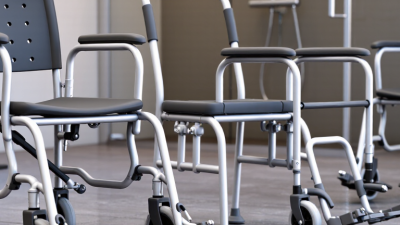
Wheel diameter affects comfort and control. Larger wheels usually roll more easily across tile, thresholds, and thick flooring. Smaller wheels may fit tighter spaces, but they can catch on uneven surfaces. Measure door lips and floor transitions before choosing. A chair with solid, non-pneumatic tires also reduces maintenance concerns. Still, larger wheels can add width and weight. Bigger is not automatically better.
Turning space deserves careful attention. Measure the bathroom doorway, toilet area, and the path beside the bed. The user should have room to turn without scraping walls or twisting awkwardly. Ask a clinician or trained mobility specialist to assess transfer technique, seat height, and caregiver access. Do not rely only on product dimensions. I once underestimated the space needed near a sink; the chair technically fit, yet turning felt unsafe. Leave extra clearance where possible. Real homes are rarely perfectly measured.
A wheeled commode chair may look stable indoors, but transport safety requires closer inspection. Ask whether the exact model has been tested under ISO 7176-19, when applicable. This standard addresses wheeled mobility devices used as seats in motor vehicles. It does not automatically cover every commode chair with wheels.
Check the product’s intended use first. Some chairs are designed only for bathroom transfers and short indoor movement. Others may have transport features, such as designated tie-down points and occupant restraint guidance.
The wording matters. “Transport compatible” is not the same as successfully tested to ISO 7176-19. Request a test report or conformity document for the specific model and configuration. A similar-looking frame is not enough.
Look closely at the instructions. They should explain where securement straps attach, which wheels must be locked, and how the occupant restraint is positioned. Ask whether testing used the same seat width, back support, casters, and accessories you plan to buy. Small changes can affect performance.
A label alone can mislead. I would also inspect the frame for loose joints, worn brakes, or damaged welds before every trip. Comfort still matters, but it should not replace verified transport information. Some claims remain unclear. Pause and ask for written evidence before using the chair as a vehicle seat.