Celebrating 45 Years of clinical innovation, comfort, and caregiver support at Broda.
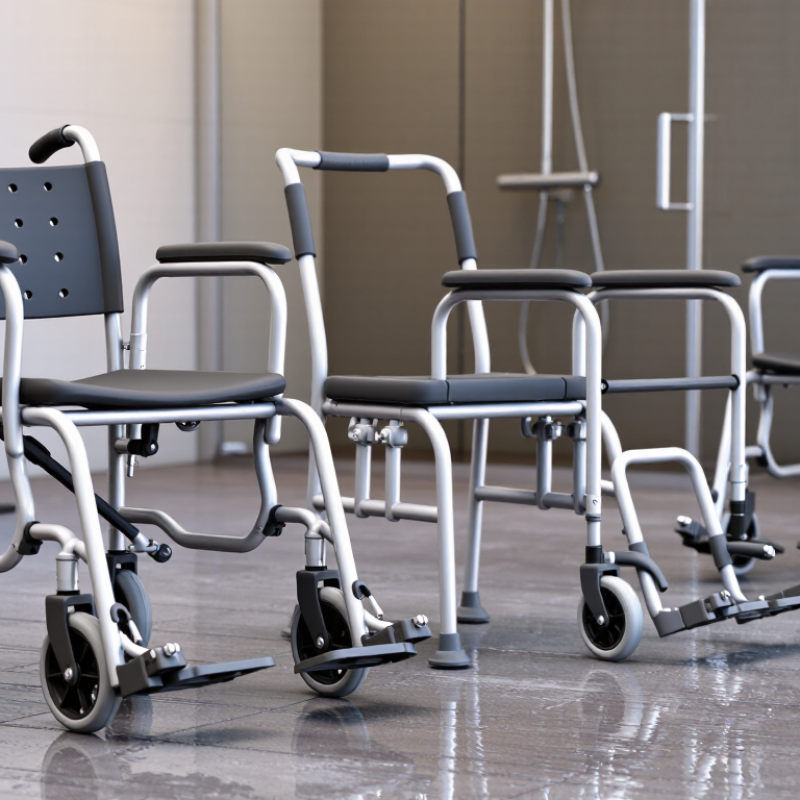
Explore the Legacy!Choosing a bariatric shower chair with wheels is a safety decision, not merely a bathroom equipment purchase. The right model must support body weight, reduce transfer strain, and remain stable on wet flooring. It should also fit through the bathroom doorway and align with the user’s shower height.
The World Health Organization reports that falls cause about 684,000 fatal injuries worldwide each year. Adults over 60 experience the greatest number of fatal falls. The U.S. Centers for Disease Control and Prevention estimates that more than one in four older adults falls annually. Its STEADI initiative highlights practical prevention measures, including safer environments and appropriate assistive equipment. These reports do not evaluate individual shower chairs. Still, they show why bathroom mobility deserves careful attention.
This 2026 buying guide examines seat width, tested weight capacity, frame strength, wheel diameter, and locking caster design. Brakes should engage firmly, even when water is present. A comfortable seat matters, but hygiene access matters too. Look for drainage openings, smooth surfaces, and removable components that simplify cleaning. Armrests and adjustable footrests can improve transfers, though they may reduce clearance in smaller bathrooms.
Do not trust capacity labels alone. Confirm whether the stated limit includes the user, clothing, and shower supplies. Check the manufacturer’s instructions, warranty, and applicable medical-device documentation. A chair can appear heavy-duty and still feel unstable. That is an easy mistake. User height, caregiver strength, doorway width, and floor slope can change the safest choice. Professional assessment remains valuable, especially after surgery or for users with limited trunk control.
Bariatric shower chairs with wheels are designed for users needing extra width, stability, and supported transfers. Capacities commonly range from 300 to 1,000 pounds. Check whether the rating includes the user, clothing, water, and personal equipment. It should.
ISO 17966:2016 addresses assistive products for bathing, showering, and toileting. It provides requirements and test methods for safety, strength, stability, and usability. However, ISO guidance does not replace a professional assessment. A higher capacity alone does not guarantee safe movement. Look for a reinforced frame, smooth-rolling casters, reliable wheel locks, and a seat that remains stable over uneven bathroom flooring. Measure doorways and turning spaces carefully. A catalog number can look reassuring, but it is not a transfer plan.
Tips: Confirm the chair’s actual tested capacity and seat width. Ask whether the wheels lock in every direction. Check the height against the shower threshold and toilet. Keep brakes engaged during transfers. Inspect bolts, casters, and welds regularly. Small defects matter. In practice, caregivers should rehearse the route before use, because a narrow doorway or wet floor can change the risk quickly. I would also document the user’s needs and review the setup after several sessions; real bathrooms rarely behave like showrooms.
2026 Top Bariatric Shower Chairs With Wheels Buying Guide
Seat dimensions can determine whether a bariatric shower chair feels stable or restrictive. A 22-inch seat may suit narrower hips, while a 24-inch seat offers more lateral room. Measure the user while seated, not standing. Add clearance without allowing excessive side movement. Two inches per side is often useful, but body shape matters. Seat depth is equally important. The front edge should support the thighs without pressing behind the knees. A depth near 18–20 inches may work for many users, yet shorter or taller bodies need closer fitting.
Check the actual seat surface, not only the advertised frame width. Padding, armrests, and side supports can reduce usable space. I would record hip width, thigh length, and the bathroom doorway width before ordering. Small details prevent expensive returns. Some specifications are rounded, and I have seen measurements vary slightly between product listings. Verify them with the seller or a qualified occupational therapist.
Safe weight distribution is more than the printed capacity. The user should sit near the seat center, with both feet supported and the casters fully locked during transfers. A higher-capacity chair can still feel unsafe if weight shifts toward one armrest. During movement, keep heavier equipment low and avoid pulling from the shower chair. Recheck brakes, seat fasteners, and wheel alignment regularly. It is easy to overlook maintenance. That mistake matters.
2026 Top Bariatric Shower Chairs With Wheels Buying Guide
Wheels and brakes decide whether a bariatric shower chair feels controlled or unpredictable. Five- to six-inch casters usually handle grout lines, drain covers, and small thresholds better than smaller wheels. They still need a firm frame and precise alignment. A larger wheel cannot fix weak construction.
The CDC reports that more than 14 million U.S. adults aged 65 and older report a fall each year. Wet bathroom floors make braking performance especially important. Test whether each caster locks without excessive foot pressure. The brake should stop rolling and swiveling, not only one movement. Check the published safe working load, including the user, water, and any attached equipment. ISO 17966 also emphasizes stability and safety for assistive personal-hygiene products. That makes caster placement worth examining, not merely the advertised weight rating.
Tips: Push the empty chair across a tiled floor, then test it with a realistic load. Try a tight turn near a wall. If the rear wheels lift, the base may be too narrow for the user’s movement. I would not assume six-inch casters always maneuver better; they can increase turning resistance in compact bathrooms. Inspect brake levers for wet-foot access, and confirm replacement wheels are available. Small details matter.
Wheels and Brakes: Assess 5–6 in Casters, Locking Systems, and Maneuverability
The chart compares common 5–6 inch caster sizes using exact wheel geometry. Theoretical axle clearance equals half of the wheel diameter, while circumference is calculated as π × diameter. Larger casters generally provide more clearance over small floor transitions, but maneuverability also depends on swivel quality, chair width, load distribution, and flooring. For braking, confirm that the locking system engages securely on the required number of casters and can be operated without reaching under the chair.
When choosing a bariatric shower chair with wheels, measure the bathroom before comparing weight capacity or seat width. The 2010 ADA Standards require at least 32 inches of clear doorway opening, measured with the door positioned at 90 degrees. The opening should not exceed 48 inches under the same access rule. Measure the actual clear space, not the door slab. Hinges, trim, and thick flooring can quietly reduce clearance.
Turning space matters just as much. ADA Section 304 recognizes a 60-inch diameter turning circle or a T-shaped area within a 60-inch square. A wheeled chair may need more practical room because casters swing outward during turns. Leave space beside the shower for parking, caregiver access, and brake operation. Check the chair’s widest point, including footrests. I have seen layouts pass a tape-measure check but fail when the chair is occupied. That is an easy mistake.
The CDC Disability and Health Data System reports that roughly one in four U.S. adults lives with a disability, increasing the value of usable bathroom planning. AARP’s 2021 Home and Community Preferences Survey found that 77% of adults aged 50 and older want to remain in their current homes. These figures support planning for changing mobility needs, not only today’s measurements. ADA rules mainly govern public accommodations, so residential projects may require stricter local guidance. Verify local requirements with a qualified accessibility professional.
Choosing a bariatric shower chair with wheels starts with the person, not the product photograph. Check the stated capacity, seat width, seat depth, and usable clearance. Do not assume “bariatric” means every body shape will fit safely. Add clothing, bathing supplies, and any assisted-transfer load when discussing capacity with a clinician. Capacity matters. CDC data show that more than one in four adults aged 65 and older falls each year. That figure makes brakes, stable positioning, and controlled transfers practical priorities.
For materials, inspect welded joints, fasteners, upholstery, and drainage paths. Powder-coated steel may feel rigid, while aluminum can reduce handling weight. Both still need corrosion-resistant hardware and careful drying. The WHO Global report on health equity for persons with disabilities estimates that 1.3 billion people experience significant disability. That broad figure is not a bariatric-chair forecast, but it reinforces the need for accessible design. Look for smooth surfaces. Rough seams trap soap and moisture. Ask whether cushions and casters can be cleaned or replaced without special tools.
Transfers deserve a room-level check. Measure the doorway, toilet position, shower threshold, and turning space before ordering. Locking casters help, but wet floors can still punish rushed movement. Choose hand grips, arm supports, and seat height that match the user’s transfer method. National Institute on Aging guidance emphasizes grab bars and nonslip bathroom surfaces, not a chair alone. I would treat clinical assessment as essential when balance, skin integrity, or caregiver lifting is uncertain. Product ratings can be incomplete.
| Buying Criterion | Recommended Specification | Why It Matters | Best Match | What to Verify Before Purchase |
|---|---|---|---|---|
| User Weight Capacity | Choose a chair rated at least 25–50 lb above the user’s current body weight. Common heavy-duty capacities range from 300 to 500 lb. | A safety margin helps account for clothing, personal-care products, movement, and uneven loading during transfers. | Users needing reinforced support or a wider seating surface. | Confirm that the stated capacity applies to the complete chair, including the seat, frame, casters, brakes, and accessories. |
| Seat Width | Typical bariatric seat widths are approximately 20–24 inches. Measure the user’s widest seated point and allow room for comfortable movement. | A seat that is too narrow can create pressure, restrict clothing changes, and make assisted transfers more difficult. | Users with wider hips, limited balance, or substantial caregiver assistance. | Measure the actual inside seat width, not the overall product width shown in the specifications. |
| Seat Depth and Height | Look for a seat depth that supports the thighs without pressing behind the knees. Adjustable seat height is useful when the user’s feet must rest firmly on the floor. | Proper positioning improves stability and reduces sliding, leg pressure, and transfer strain. | Users with short legs, tall frames, reduced leg strength, or different transfer surfaces. | Compare the seat height with the bed, toilet, and shower threshold. Check whether height adjustment changes the chair’s stability. |
| Frame Material | Use corrosion-resistant aluminum or powder-coated steel. Aluminum is lighter; steel is often heavier and may provide a more rigid feel. | Bathrooms expose equipment to water, humidity, cleaning chemicals, and frequent handling. | Aluminum for easier maneuvering; steel for users prioritizing rigidity and a higher overall chair weight. | Inspect welds, fasteners, coating quality, and instructions for preventing rust. Avoid damaged or chipped finishes. |
| Seat and Back Material | Choose molded plastic, seamless padded vinyl, or a ventilated polymer seat with rounded edges and drainage openings. | Non-porous, easy-clean surfaces reduce moisture retention and simplify bathing care. | Molded or ventilated surfaces for routine shower use; padded surfaces for users needing extra comfort. | Check whether the cushion is removable, water-resistant, flame-resistant where applicable, and compatible with the manufacturer’s cleaning instructions. |
| Caster Size and Type | Four swivel casters with approximately 4–5 inch wheels are common. Larger wheels may roll more easily over small thresholds. | Wheel size and tread affect maneuverability, turning effort, and the ability to cross bathroom transitions. | Larger, smooth-rolling casters for assisted transfers across level indoor surfaces. | Verify total width, wheel material, swivel performance, and whether the casters are suitable for wet floors. |
| Wheel Locks and Braking | All four casters should lock securely, or the product should provide a clearly specified central locking system. | Locked wheels help prevent movement during sitting, standing, showering, and toileting. | Users requiring assisted transfers or having limited trunk and leg control. | Test the brakes with the chair occupied according to the instructions. Confirm that the lock pedals are reachable without bending dangerously. |
| Transfer Design | Consider swing-away or removable footrests, detachable armrests, open-front access, and a frame that can approach the bed or toilet. | Transfer-friendly features reduce lifting, twisting, and the need to clear obstacles around the user. | Users transferring with a caregiver, transfer board, standing aid, or mechanical lift. | Check clearance under the bed, around the toilet, and through doorways. Ensure removable parts lock positively when reinstalled. |
| Armrests and Footrests | Use reinforced armrests for support and height-adjustable or swing-away footrests when leg positioning is important. | Armrests can improve lateral stability, while footrests help protect the feet during movement. | Users with poor balance, reduced leg control, or a need for supported repositioning. | Confirm armrest spacing, footplate length, pinch-point protection, and whether the parts support the stated capacity. |
| Toileting Compatibility | For dual-purpose use, select a commode opening and removable pan system that match the user’s anatomy and bathroom setup. | A properly sized opening improves hygiene and allows use over a compatible toilet or with a collection pan. | Users who need showering and toileting support without repeated transfers. | Measure the opening, pan dimensions, toilet height, and clearance around the toilet. Check splash-guard and lid arrangements. |
| Overall Width and Maneuverability | Measure the full outside width, including wheels and armrests. Many bariatric models are wider than standard shower chairs. | Doorways, bathroom entries, shower enclosures, and turning spaces may limit practical use. | Bathrooms with wide doors, roll-in showers, and sufficient turning clearance. | Measure the narrowest doorway and the shower entry. Account for wall trim, door hardware, and caregiver walking space. |
| Shower Entry Compatibility | A level or roll-in shower is generally easiest. For thresholds, verify the chair’s undercarriage and wheel clearance. | Even a small lip can stop casters, increase tipping risk, or require unsafe lifting. | Accessible bathrooms with minimal thresholds and slip-resistant flooring. | Measure threshold height and width. Do not assume that a chair marketed as “rolling” can safely cross every shower lip. |
| Stability and Center of Gravity | Prefer a wide, rigid base, low center of gravity, anti-tip design where appropriate, and a backrest that does not flex excessively. | Stability is especially important when the user leans, reaches, or is repositioned by a caregiver. | Users with balance limitations, involuntary movements, or significant transfer assistance needs. | Review the tipping warnings and test the chair on the intended floor surface. Never use it on stairs or uneven outdoor ground unless specifically approved. |
| Cleaning and Infection Control | Choose smooth, non-porous surfaces with minimal seams and removable components. Use only cleaning agents approved in the care instructions. | Accessible surfaces make it easier to remove soap residue, body fluids, and buildup around the commode opening. | High-frequency daily use and settings where multiple caregivers provide care. | Confirm maximum water temperature, disinfectant compatibility, drying requirements, and whether the pan and cushion can be cleaned separately. |
| Maintenance Requirements | Inspect brakes, casters, frame joints, armrests, footrests, seat fasteners, and drainage areas regularly. | Routine inspection helps identify loose hardware, corrosion, worn wheels, and weakened supports before failure. | All users, especially those using the chair several times per day. | Review replacement-part availability, tool requirements, inspection intervals, and the procedure for removing hair or debris from casters. |
| Comfort and Pressure Management | Look for a supportive backrest, a suitable seat contour, and pressure-relieving accessories only when they remain stable and easy to clean. | Long bathing sessions and reduced mobility can increase discomfort and skin pressure. | Users with sensitive skin, reduced sensation, or extended sitting time. | Consult a qualified clinician for users at risk of pressure injuries. Inspect skin regularly and avoid loose cushions that can shift during transfers. |
| Caregiver Ergonomics | Prioritize push handles, accessible brakes, manageable chair weight, and controls that can be operated without excessive bending. | Good caregiver access reduces back strain and improves control during repositioning. | Users who require one-person or frequent caregiver-assisted movement. | Confirm handle height, pushing force, turning radius, and whether the caregiver can reach the brakes while maintaining control of the chair. |
| Documentation and Safety | Use a chair supplied with clear weight limits, assembly instructions, cleaning guidance, inspection procedures, and warnings. | Correct assembly and use are essential for a wheeled device used on wet surfaces. | All buyers, particularly facilities and users with complex care plans. | Read the complete manual before use. Stop using the chair if the frame bends, brakes fail, casters wobble, or hardware cannot be tightened. |