Celebrating 45 Years of clinical innovation, comfort, and caregiver support at Broda.
Explore the Legacy!Choosing a rolling shower chair commode is a practical safety decision, not merely a product comparison. For buyers, the details matter: stable wheels, reachable brakes, smooth transfers, and a seat that fits the bathroom. Small differences can change daily care.
The World Health Organization and UNICEF reported in their 2022 Global Report on Assistive Technology that 2.5 billion people need one or more assistive products. That figure may reach 3.5 billion by 2050. These estimates cover many product types; they are not specific to shower commodes. Still, they show why dependable mobility and personal-care equipment deserves careful attention. WHO Director-General Dr. Tedros Adhanom Ghebreyesus said, “Assistive technology is a game-changer for people who need it, transforming their lives and enabling their inclusion in society.” A commode chair is one small part of that wider picture.
This guide examines ten suppliers through practical criteria, including product range, stated materials, customization options, and available support. It also considers whether specifications clearly describe weight capacity, wheel locks, and cleaning requirements. A polished catalog is not proof of long-term reliability. Nor does a low price tell the whole story. Supplier claims should be checked against product documentation and direct questions. Rankings have limits, too; a chair suited to one home may not work in another. The comparison aims to help buyers ask better questions, not promise a perfect choice.
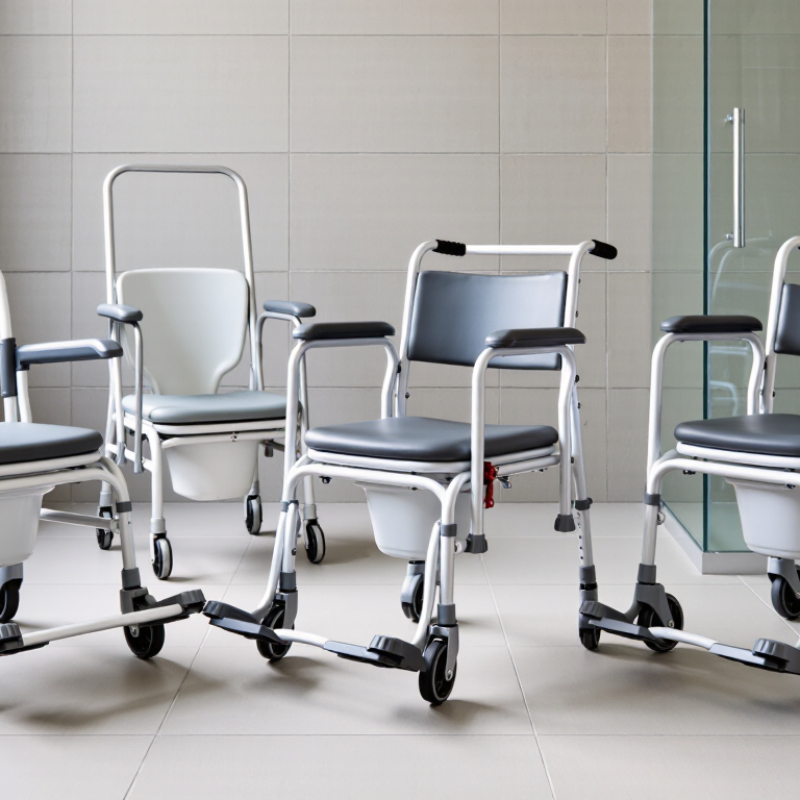
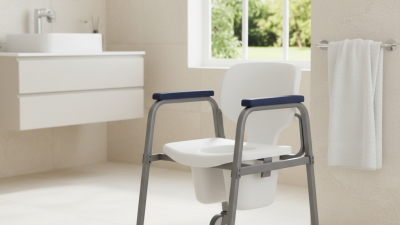
A rolling shower chair commode is a wheeled seat designed to support toileting and bathing for someone who has difficulty standing or walking. It typically has a seat opening, a removable commode pan, and wheels with locking brakes. Some models can be positioned over a compatible toilet, while others are intended for use with the pan. Features vary, so the name alone does not tell you exactly how a chair works.
The chair may include armrests, a backrest, and footrests to help with seated support during transfers and washing. For example, a caregiver might roll it across a level bathroom floor, lock the wheels, and help the user sit before bathing.
Stability matters. Check the stated weight capacity, seat width, doorway clearance, and whether the brakes are easy to reach. A raised threshold or cramped bathroom can make maneuvering difficult, even with a well-built chair. The fit should be assessed in the actual space, not just from product dimensions.
Cleaning also deserves attention: removable pans and smooth surfaces can simplify routine care, but small crevices may still need careful washing. The term “rolling shower chair commode” can be confusing, and not every design suits every toilet, transfer method, or user.
A useful evaluation starts with the product, not the catalog. The WHO’s 2022 Global Report on Assistive Technology estimates that over 2.5 billion people need one or more assistive products, while nearly one billion lack access. This broad figure is not specific to commode chairs, but it highlights why dependable design and supply matter. Ask each Chinese supplier for the chair’s rated load, seat dimensions, wheel-lock details, and corrosion-resistance test results. Request the test method, not just a certificate image.
ISO 17966:2016 covers requirements and test methods for assistive products for personal hygiene. Ask whether the supplier tests relevant models against this standard, and have an independent inspector verify the records. During sample checks, roll the chair across a damp, tiled floor. Test the brakes, inspect welds and fasteners, and check whether the seat and bucket can be removed without awkward lifting. Small details matter.
Verify that the factory name on the quotation matches its business documents and audit records. Confirm material specifications, production lead times, packaging, and how defects are handled. A video call can help, but it cannot replace a physical sample. I would not treat a polished catalog as proof. No checklist catches everything. Even a careful review can miss a weak caster or a loose fitting; record findings and agree on acceptance criteria before placing an order.
Profiles of ten Chinese rolling shower chair commode suppliers are most useful when they show how each manufacturer solves practical care challenges. Their capabilities may include full-line patient-care equipment, lightweight aluminum frames, stainless-steel fabrication, folding designs, adjustable seating, or customized production. These are areas to investigate, not claims about any unnamed supplier. WHO’s 2022 Global report on assistive technology estimates that 2.5 billion people need one or more assistive products; this number could reach 3.5 billion by 2050. The figure describes broad assistive-technology needs, not demand for shower commodes alone.
When comparing supplier profiles, look beyond product photos. Check seat width, caster locking, frame finish, weight capacity, drainage, and whether a commode bucket can be removed without awkward lifting. Ask for test records, material specifications, and clear instructions for cleaning and assembly. Details matter. A supplier with export experience may also provide useful packaging and spare-part support, but this should be verified rather than assumed.
A polished catalog is not proof of dependable performance. Request samples, inspect welds and moving joints, and test the brakes on a wet floor where possible. Some product pages leave maintenance requirements vague; that is worth challenging. A fair comparison should record both strengths and unanswered questions, since the lowest quotation may not reflect long-term serviceability.
Comparing rolling shower chair commode suppliers takes more than reviewing product photos. Check seat width, transfer clearance, wheel locks, load capacity, and whether the commode bucket lifts out without awkward twisting. Ask for dimensioned drawings and test reports for the exact model, not a similar frame. Details matter. ISO 17966:2016 covers assistive products for personal hygiene, including relevant safety and performance considerations; a certificate alone, however, does not prove every configuration has been tested. Confirm its scope, issuing body, and validity.
Service quality is equally practical. Request clear assembly instructions, spare-part availability, warranty terms, and a named contact for troubleshooting. Ask how suppliers handle replacement casters and seat components, since wear often appears there first. The WHO and UNICEF Global Report on Assistive Technology (2022) estimates that more than 2.5 billion people need one or more assistive products, while nearly one billion lack access. That scale makes dependable supply and maintenance important, not just a low unit price. Still, supplier questionnaires can miss real-world usability; wherever possible, compare sample chairs with caregivers and users, including wet-floor braking and bucket removal. A neat brochure cannot answer everything.
A supplier’s catalog is only a starting point. Ask for the exact model’s drawings, dimensions, materials, and rated load. Check that the seat opening, armrests, and footrests suit the user and bathroom layout. A chair that looks sturdy in a photo may still be difficult to maneuver through a narrow doorway. Request clear images or a live video showing wheel locks, frame joints, and the commode bucket’s fit. Confirm that product test reports match the model being quoted, and check their dates and issuing laboratory. Documents deserve a closer look.
Tips: Ask for a sample when practical. Test the brakes on a slightly sloped surface, inspect welds, and roll the chair over a threshold. Confirm packaging, spare parts, warranty terms, and lead times in writing. Compare like with like; vague load ratings or unclear model numbers make supplier quotes hard to assess.
Before placing a larger order, speak with the factory team and ask how defects are recorded and handled. A video call can clarify details, but it cannot replace an inspection. If possible, use an independent quality check before shipment. Keep your own notes, too. I would not rely on a single polished report; small inconsistencies can be easy to miss when schedules are tight.