Celebrating 45 Years of clinical innovation, comfort, and caregiver support at Broda.

Explore the Legacy!

2026 Best Tilt in Space Shower Chair for Buyers

Choosing the right tilt in space shower chair is a practical safety decision, not a style choice. The best model should fit the user, caregiver, bathroom, and daily transfer routine. A chair that looks sturdy online may still feel unstable beside a narrow shower entrance.

A useful buying principle, consistent with seating and mobility specialist Michelle Lange’s work, is: “Support the person, not just the product.” This is a guiding paraphrase, not a verified verbatim quotation. In practice, check the user’s seated width, trunk support, head position, and ability to tolerate a reclined posture. Look closely at the tilt range, wheel locks, footrests, seat opening, and materials. Wet tile changes everything. So does a tight turning space.

This guide compares features buyers can assess before purchasing, including adjustability, cleanability, transfer access, and caregiver handling. It also considers whether the chair suits short shower routines or longer periods of seated care. Ask a clinician or qualified seating professional to assess fit when posture, skin protection, or transfers are concerns. Product specifications cannot replace an individual evaluation. And some details are easy to overlook: a brake lever may be difficult to reach, or a cushion may complicate cleaning. That matters. The 2026 picks aim to help buyers compare options carefully, while recognizing that no single chair works for everyone.
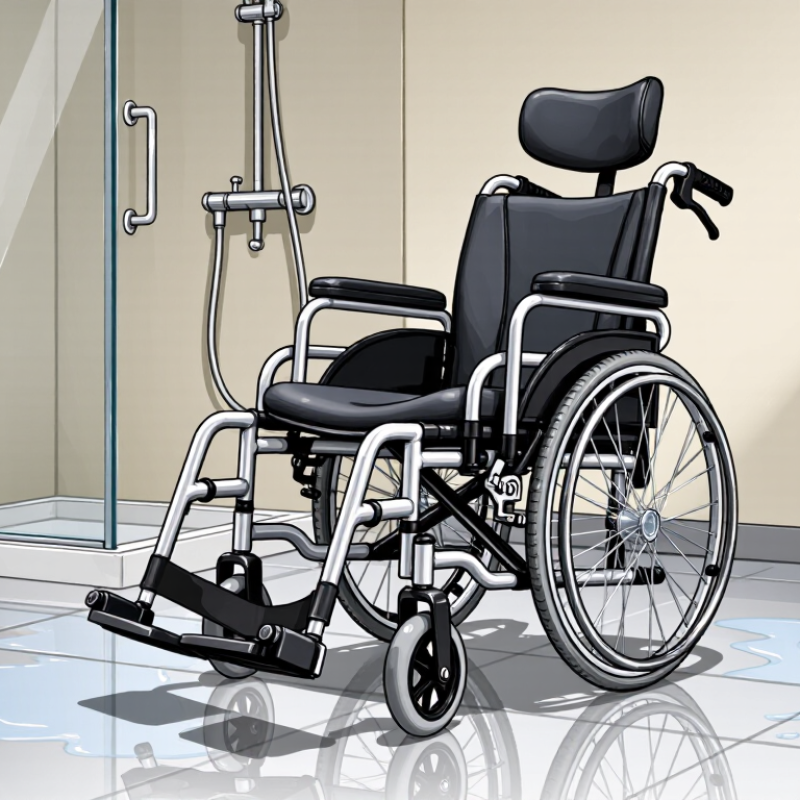
2026 Best Tilt in Space Shower Chair for Buyers

What a Tilt-in-Space Shower Chair Is and How It Works

A tilt-in-space shower chair moves the seat and backrest together while keeping their angle nearly unchanged. This differs from a reclining chair, where the backrest moves independently and opens the hip angle. The shared tilt can help distribute pressure and support a person who has difficulty staying upright during bathing. It is not simply a reclining chair.

The mechanism is practical: a caregiver adjusts the frame so the person leans back as one supported unit, while feet remain on the footrests and the head stays supported if the chair includes a headrest. Controls vary; some chairs use a hand-operated lever, while others have powered adjustment. Small details matter. Check that brakes are engaged, the chair fits the shower space, and the user’s feet and arms are positioned securely before washing. An occupational therapist or seating specialist can help assess fit and transfer needs.

CDC data indicate that more than 14 million U.S. adults aged 65 and older report falling each year, roughly one in four. This figure covers falls generally, not shower-chair incidents, but it shows why bathing support deserves careful attention. Tilt can improve positioning, yet it cannot prevent every slip or transfer-related fall. The distinction is easy to miss. A clinician should confirm the chair’s weight capacity and safe tilt range for the intended user.

Key Features That Affect Comfort, Safety, and Adjustability

2026 Best Tilt in Space Shower Chair for Buyers

Key Features That Affect Comfort, Safety, and Adjustability

A tilt-in-space shower chair should support the user without making transfers harder. Check whether the tilt adjusts smoothly and holds its position under load. A supportive back, padded seat, and adjustable headrest can help maintain posture during bathing. But padding should not trap water or make cleaning difficult. Look for secure footrests, arm supports, and accessible brakes. Small details matter. The WHO’s 2021 Falls fact sheet estimates 37.3 million falls each year are serious enough to require medical attention. That figure is not specific to bathrooms, but it reinforces why stable seating and caregiver access deserve careful attention.

Fit matters as much as features. Confirm seat width, depth, overall height, and the chair’s stated weight capacity against the user’s needs. Check that the chair fits through the bathroom doorway and leaves room for a caregiver to work. Lockable casters should engage reliably on the actual floor surface; test them before use. A feature list cannot replace a supervised trial, and one tilt angle will not suit everyone. That part is easy to underestimate.

Tips: Before buying, test the controls with wet hands and check whether the chair tilts without pinching skin or shifting the user. Ask a qualified occupational therapist or seating professional to assess positioning. Recheck fasteners, brakes, and padding regularly. I would not assume “adjustable” automatically means easy to adjust.

How to Match a Chair to the User and Bathroom

Choosing a tilt-in-space shower chair starts with the user, not the product dimensions. Measure hip width while the user sits, then check seat depth from the back of the pelvis to the knee crease. Leave room for comfortable movement. A seat that looks spacious online may feel restrictive once armrests are fitted. Small details matter. Consider trunk control, leg length, skin sensitivity, and how much help the user needs during transfers. Tilt can support posture and pressure management, but it does not replace an individualized assessment. If transfers are difficult, ask a qualified therapist or clinician to review the setup.

Now measure the bathroom. Note the doorway’s clear width, shower threshold, floor space, and room needed to turn the chair. Check whether the chair can pass beside the toilet or basin without catching its wheels. Measure the shower area with doors open, not just the tray. A tape measure can miss awkward corners; a cardboard outline on the floor may reveal them. Check that the frame fits securely and that brakes are reachable for the caregiver. The user should be able to rest their feet on the foot supports without knees pressing against the shower wall.

Think through the real routine. Can the caregiver reach the controls? Is there enough space to tilt without hitting a screen or shelf? Wet floors change how steady a transfer feels. Try the chair in the intended space, if possible, and reassess after the first few uses. The fit may need adjusting.

2026 Best Tilt in Space Shower Chair for Buyers - How to Match a Chair to the User and Bathroom

Buyer consideration What to assess How to match the chair Practical check before purchase
User’s sitting balance Ability to keep the head and trunk upright during bathing; need for hands-on support. Choose a tilt-in-space design when supported repositioning is needed. Tilt moves the seat and back together, generally keeping the hip angle more constant than recline. Have a clinician or experienced seating professional assess positioning, head support, and caregiver technique.
Transfers Whether the user transfers independently, with assistance, or with a transfer aid or lift. Check for suitable armrests, transfer access, seat height, and compatibility with the transfer method. Removable or swing-away components may help, if securely designed for the task. Measure the user’s usual transfer setup and confirm that the chair can be positioned safely beside it.
Bathroom doorway and route Clear width at the narrowest doorway, hallway, and turn; account for handles and other obstructions. Compare these measurements with the chair’s actual overall width and turning footprint—not just its seat width. Measure with doors in their usual position. Confirm the occupied chair can reach the shower without blocking an exit.
Shower or wet-room footprint Usable floor area, shower threshold, drain location, and space for a caregiver to assist. Match the chair’s base dimensions and turning space to the shower. A compact frame may suit a small enclosure, while a larger area can allow easier assisted access. Measure the clear interior space and check that wheels or feet will not obstruct the drain or shower door.
Seat fit and posture User’s seated hip width, thigh length, leg position, and need for pelvic or lateral support. Select a seat and supports that fit the individual without pressure or excessive gaps. Adjustable footrests, headrests, and lateral supports may be appropriate when prescribed. Use the manufacturer’s measurement instructions and, where possible, arrange a seating assessment or trial.
Weight capacity User’s weight and any additional load from clothing or bathing equipment, where applicable. Choose a chair whose stated safe working load meets the user’s needs. Capacity is model-specific and should not be inferred from appearance or seat size. Verify the capacity in the current product specifications and follow the manufacturer’s loading instructions.
Caregiver access and controls Who will operate the tilt mechanism and whether controls can be reached safely during bathing. Look for clearly explained controls, secure locking, and a layout that lets the caregiver assist without awkward reaching. Test operation, locking, and access from the positions the caregiver will use; follow the instructions for use.
Materials and drainage Exposure to water and bathing products, drainage needs, and the time available for cleaning and drying. Choose materials and upholstery specifically rated by the manufacturer for wet-area use. Drainage-friendly surfaces can help avoid pooled water. Check cleaning instructions, corrosion guidance, and whether cushions or supports can be removed for routine cleaning.
Safety features Need for brakes, anti-tip stability, secure foot support, and appropriate user positioning. Confirm the chair has the safety features required for its intended setting and that any accessories are compatible with the frame. Review the manual for brake use, inspection intervals, safe tilt limits, and restrictions on use over thresholds or slopes.
Storage and maintenance Whether the chair must be moved, stored, or cleaned between uses. Consider frame weight, wheel configuration, folding or disassembly requirements, and availability of replacement parts. Check storage dimensions and confirm that the person responsible can move and maintain the chair safely.

Selection note: Dimensions, safe working loads, tilt ranges, and compatible accessories vary by model. Confirm all specifications with the current manufacturer’s documentation and seek advice from a qualified healthcare or seating professional when the user has complex positioning or transfer needs.

Materials, Maintenance, and Long-Term Durability

For a tilt-in-space shower chair, material choice affects cleaning, comfort, and service life. Aluminum frames are light and resist corrosion, while stainless-steel parts can tolerate frequent moisture; either can still suffer from neglected joints or damaged finishes. Molded seats should have smooth, accessible surfaces and drainage openings that do not trap soap residue. Small details matter. Check welds, fasteners, and tilt-lock points for looseness, pitting, or cracks. Rinse after use and dry hard-to-reach areas. Avoid abrasive cleaners unless the care instructions permit them.

Durability depends on more than the frame. Inspect straps, wheels, brakes, and moving joints regularly, and follow the manufacturer’s cleaning and maintenance schedule. Do not oil a mechanism without guidance; some lubricants can attract grit or affect nearby materials. The CDC reports that more than one in four adults aged 65 and older fall each year, underscoring why stable brakes and reliable locking deserve routine checks. That statistic concerns falls generally, not shower-chair performance. The WHO and UNICEF Global Report on Assistive Technology estimates that 2.5 billion people need one or more assistive products worldwide. For buyers, replaceable wear parts and clear load ratings may matter more over time than a polished finish. And one honest caveat: even a well-built chair needs hands-on inspection. A quick visual check can miss wear inside a hinge.

How to Compare Models and Choose the Right Chair in 2026

When comparing tilt-in-space shower chairs in 2026, check how the seat and back move together. This design can support a reclined posture without sliding the user forward, but comfort and positioning vary. Ask a clinician or occupational therapist to assess posture, head support, and transfer needs. Fit matters.

Measure the shower doorway, turning space, and distance to the transfer surface before ordering. Compare overall width, seat depth, footrest adjustment, and the chair’s rated weight capacity. A chair that fits on paper may still be difficult to turn beside a shower screen. Check whether its brakes are easy for the caregiver to reach, and whether the frame and upholstery are intended for repeated wet use. Test it dry.

Compare cleaning access, removable parts, and the effort required to adjust the tilt. If a caregiver will operate it, have them try the controls and move the chair through the actual bathroom route. The specification sheet can look reassuring, yet small differences in handle position or wheel clearance matter in a cramped room. Don’t choose by maximum tilt alone. The right model should fit the user, the caregiver, and the space, with safe transfers confirmed before regular use.