China Top 10 Geriatric Chair Suppliers for Global Buyers
Choosing a geriatric chair supplier requires more than comparing prices and product photographs. Global buyers need to examine seat height, armrest shape, frame stability, upholstery, and available product documentation. These details affect daily transfers, comfort, cleaning routines, and fit across different care settings. Small details matter.
Geriatrician Dr. Bill Thomas described “the three plagues of nursing home existence” as “boredom, loneliness, and helplessness.” His words are not a chair specification, but they offer useful context: seating belongs within a broader experience of care, dignity, and participation. A chair cannot solve every problem. It can, however, support safer movement and more comfortable time at a table or bedside when selected for the user and setting.
This guide introduces ten geriatric chair suppliers for global buyers, with attention to product range, manufacturing capabilities, customization, communication, and after-sales support. Ask suppliers for clear dimensions, material details, load ratings, and sample policies before making comparisons. Confirm that documentation suits your destination market and intended use; requirements vary. Fit varies.
Supplier information and product lines can change, so this list should be treated as a starting point, not a final endorsement. Real-world trials matter, and sometimes catalog descriptions leave important questions unanswered. A careful shortlist, followed by direct verification, gives buyers a more reliable basis for sourcing.
Global Aging Demand: Adults 65+ to Reach 16% of the Population by 2050 (UN)
The United Nations’ World Population Prospects 2022 projects that adults aged 65 and older will make up 16% of the global population by 2050, up from about 10% in 2022. For care facilities, this shift is not just a headcount. It means more rooms may need seating that supports standing, transfers, and long periods of rest. Small details matter: stable armrests, wipeable upholstery, and seat heights matched to users’ mobility.
A geriatric chair supplier should be assessed against real care routines, not just catalogue photos. The World Health Organization’s Decade of Healthy Ageing framework emphasizes environments that help people maintain functional ability. For buyers, that makes practical checks essential: Can staff move the chair safely? Are controls easy to reach? Does the fabric tolerate frequent cleaning? These questions are especially relevant when chairs will serve people with different body sizes and levels of independence.
Look closely. A polished specification sheet cannot show whether a chair feels secure during a transfer. Request clear measurements, care instructions, and evidence of relevant testing. I would also avoid assuming one model fits every facility; that shortcut can fail. Population projections indicate growing demand, but local care practices and room layouts still shape the right purchase.
Geriatric Chair Categories: Lift, Transfer, Recliner, and Mobility Seating
China Top 10 Geriatric Chair Suppliers for Global Buyers
Geriatric chairs serve different needs, so category matters more than appearance. Lift chairs help users rise from sitting with powered support. Buyers should check seat height, weight capacity, control placement, and how smoothly the chair moves. A control that is hard to reach can make a useful feature frustrating. Transfer chairs support movement between a bed, chair, or bathroom. Review wheel locks, armrests, seat width, and clearance around doorways. Small details matter.
Recliners suit people who need adjustable sitting positions for rest or daily activities. Look for stable footrests, supportive cushions, and upholstery that is easy to clean. Mobility seating is designed for moving around, but not every model fits every home. Compare turning space, wheel size, and access to charging or storage. No category is perfect. A comfortable chair may still be difficult to maneuver in a narrow room.
Tips: Measure doorways and the intended parking area before ordering. Ask suppliers for product dimensions, operating instructions, and care guidance. If possible, test the controls with the intended user. Think about who will assist with transfers, too. Buyers sometimes focus on features and overlook routine cleaning or caregiver access. That is worth reconsidering.
Safety Priorities: WHO Estimates 684,000 Fatal Falls Worldwide Each Year
The World Health Organization’s Falls fact sheet estimates that 684,000 fatal falls occur worldwide each year. Adults over 60 face the greatest risk of fatal falls. These figures make chair safety a practical concern for geriatric care, not a minor product detail. A stable frame, secure armrests, non-slip feet, and easy-to-reach controls can support safer sitting and standing. They cannot prevent every fall. Still, they may reduce avoidable hazards around a chair.
For global buyers comparing geriatric chair suppliers, request documented load testing, clear user instructions, and evidence of quality-control procedures. Check that seat height suits the user’s needs and that brakes or adjustable parts work consistently. Ask how suppliers assess stability on common floor surfaces. WHO’s estimate describes falls broadly, not chair-related incidents, so it should not be used to claim that any chair prevents falls. That distinction matters. Product specifications can look reassuring; real-world fit still needs checking. I would not treat a longer feature list as proof of safer use.
Tips: Test the chair with the intended user when possible. Check that feet rest firmly on the floor, armrests feel secure, and controls are reachable. Recheck after delivery. Small setup details get missed.
Supplier Evaluation: Standards, Load Capacity, Customization, and Support
When comparing geriatric chair suppliers, ask for test reports and the standards each model is designed to meet. Requirements can differ by destination market, so confirm that the documentation suits your intended use. Check frame stability, braking performance, upholstery durability, and whether care staff can clean seams and contact points easily. Small details matter.
Load capacity needs more than a number on a product sheet. Ask how the rated limit was tested, and consider repeated sitting, standing, and assisted transfers. A rating alone is not enough. Request clear instructions for safe use and routine inspection. For customization, confirm seat width, armrest height, footrest options, fabric choices, and control placement. A remote that is hard to reach can make a useful feature frustrating. Ask whether changes affect testing, delivery time, or spare-part availability.
After-sales support should be specific. Confirm warranty terms, replacement-part lead times, and how technical questions are handled across time zones. Request installation guidance and maintenance schedules in writing. A checklist can still miss everyday realities, such as narrow doorways or limited storage for chairs. Share room measurements and care routines with the supplier before ordering, then review a sample or detailed drawings when possible.
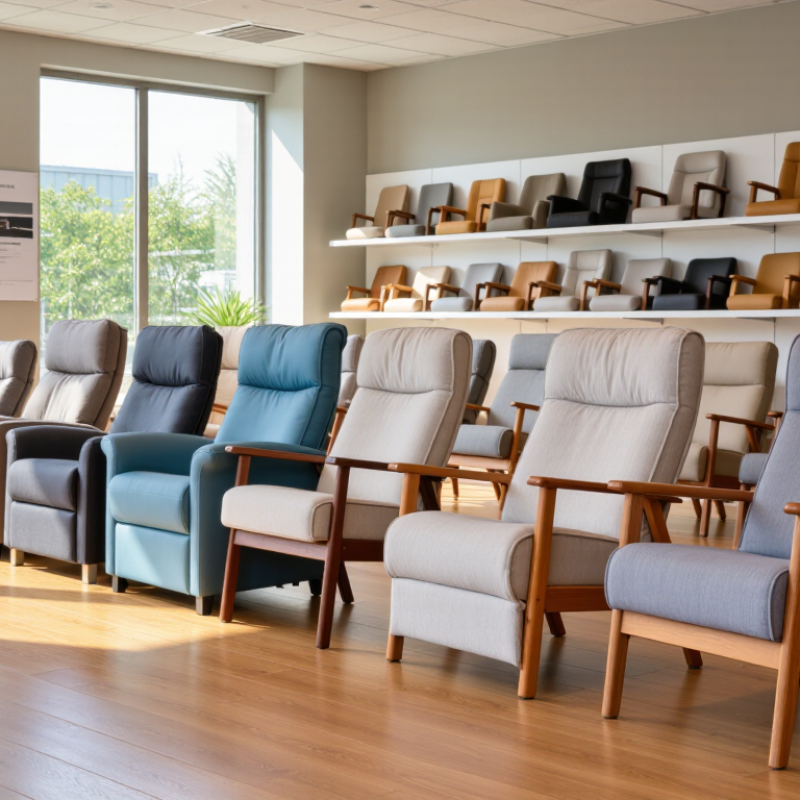
Top 10 Geriatric Chair Suppliers: Product Range and Global Buyer Fit
Global buyers comparing geriatric chair suppliers should look beyond product counts.
The World Health Organization’s Ageing and Health fact sheet estimates that 1.4 billion people will be aged 60 or older by 2030, rising to 2.1 billion by 2050. That growth points to varied needs, from stable dining chairs to adjustable models for clinical and residential care. Fit varies.
A practical supplier range may include chairs with supportive arms, wipe-clean upholstery, lockable wheels, and adjustable seat heights. Ask for seat dimensions, safe working loads, replacement-part availability, and clear assembly instructions. These details matter when chairs must pass through narrow doorways or fit beneath existing tables.
For international orders, also check packaging, lead times, shipping options, and whether product documents are available in usable formats.
The WHO’s figures describe population ageing, not demand for any single chair type; local care settings and purchasing budgets still shape selection. A broad catalogue can help, but it does not guarantee a good fit.
Request samples or dimensional drawings where possible, and confirm specifications before placing a bulk order. One overlooked measurement can cause trouble.