Top 10 Laser Bird Repellent Suppliers for Global Buyers
Choosing a reliable Laser Bird Repellent supplier requires more than comparing prices or product photographs. Global buyers need evidence of field experience, optical safety, weather resistance, and responsible bird-management practices. A supplier may promise broad coverage, yet a wet warehouse roof, reflective glass wall, or nearby nesting area can change performance significantly.
Dr. Richard A. Dolbeer, a respected wildlife-hazard researcher, has said, “There is no single solution to bird-strike risk.” This principle also applies to commercial bird deterrence. Laser systems can support humane management when trained personnel use them carefully, especially around warehouses, farms, airports, ports, and solar facilities. They should not replace habitat assessment, sanitation, exclusion methods, or local professional guidance. A bright beam is not a complete strategy.
This guide examines ten Laser Bird Repellent suppliers serving international buyers. The comparison considers product design, beam control, operating range, automation, installation support, documentation, and after-sales service. It also considers whether suppliers explain safe operating boundaries clearly. That detail matters. Reliable companies usually provide manuals, testing information, warranty terms, and responsive technical communication. Some claims remain difficult to verify. No ranking is perfect. Buyer feedback may be limited, specifications can vary between batches, and real sites rarely match laboratory conditions. Therefore, readers should request demonstrations, certificates, sample videos, and written quotations before purchasing. The strongest supplier is not always the cheapest. It is the one that combines practical performance, transparent support, and responsible use across different operating environments.
How Laser Bird Repellent Systems Work and Where They Are Used
Top 10 Laser Bird Repellent Suppliers for Global Buyers
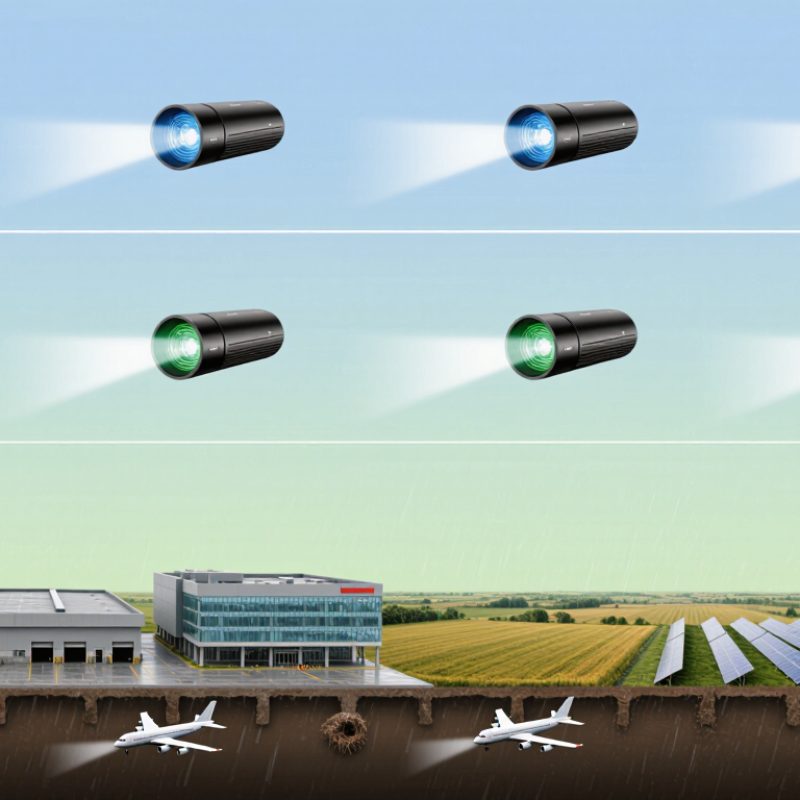
Laser bird repellent systems use moving light patterns to trigger an avian escape response. Birds often perceive the beam as a physical threat approaching across the ground or airspace. The device usually sweeps green or red light through selected zones, while sensors or timers adjust movement and operating hours.
The need is measurable. The FAA Wildlife Strike Database recorded more than 19,000 reported wildlife strikes involving civil aircraft in 2023, with birds representing most incidents. Airports, farms, landfills, warehouses, solar facilities, and aquaculture sites now consider laser deterrence for open areas. Results depend on species, weather, terrain, and installation quality. A laser may move gulls from a runway, but it may not control every flock permanently. That limitation matters.
Tips: Test the system during peak bird activity. Aim below eye level and avoid occupied work areas. Combine laser movement with habitat control, netting, or sound-based methods when necessary. USDA APHIS wildlife-management guidance emphasizes integrated control rather than relying on one technique. Buyers should request trial data, coverage maps, safety instructions, and maintenance records. In my field observations, poorly positioned units often create false confidence. The technology is useful, not magical.
Key Criteria for Evaluating Global Laser Bird Repellent Suppliers
Global buyers should evaluate laser bird repellent suppliers beyond catalog claims. Ask for documented field performance, not laboratory optimism. A credible supplier explains target species, coverage area, operating hours, and weather limits. Request test records from farms, warehouses, and food-processing facilities. Check laser classification, optical power, beam controls, and local compliance documents. The system must deter birds without causing injury. Safety comes first.
Hardware should survive dust, rain, heat, and vibration. Look for an IP rating, operating temperature range, enclosure materials, and replaceable parts. Ask how the software handles moving birds, reflective surfaces, and nearby roads. Static patterns may lose effectiveness. Suppliers should disclose habituation risks and known limitations. A 30-day pilot with baseline counts provides stronger evidence. Measure bird landings, droppings, cleaning hours, and crop losses. Avoid vague satisfaction claims. Results can disappoint.
Supplier reliability matters after installation. Review traceable certifications, detailed manuals, warranty terms, spare-part availability, and technical response times. Global buyers also need suitable voltage options, shipping documents, language support, and installation training. Ask for references from similar climates and verify them directly. Be cautious with impossible coverage promises. In one practical assessment, a bright metal roof created blind spots; a redesign improved performance, but did not solve everything. That honest limitation was more valuable than a perfect sales presentation.
Top 10 Laser Bird Repellent Suppliers by Product Range and Market Reach
Top 10 Laser Bird Repellent Suppliers for Global Buyers
The leading ten laser bird repellent suppliers differ mainly in range and market reach. Some provide handheld devices for orchards and warehouses. Others offer automated units, solar systems, rotating beams, and multi-zone controls. The strongest suppliers also provide site surveys, installation, training, and maintenance. This matters because bird pressure changes with season, light, weather, and food availability.
The FAA recorded 19,367 wildlife strikes in 2023, with birds involved in most incidents.
This figure highlights the need for reliable deterrence around airports and industrial sites. Suppliers with international distributors can support multiple regions faster. However, market reach should not replace technical quality. Buyers should examine optical safety controls, weather resistance, coverage distance, battery life, and local service capacity.
The FAO has reported that pests can reduce global crop production by up to 40 percent.
Birds are only one part of that problem, but they remain costly in exposed crops.
No ranking is perfect. Actual performance depends heavily on site design and bird species.
Tips:
Request field-test records, not only laboratory claims. Compare coverage maps carefully. Ask whether technicians can adjust installation angles after monitoring bird behavior.
A low-cost unit may fail in fog, strong sunlight, or crowded nesting areas. Suppliers offering product variety and regional support usually provide better long-term value, though this assumption still needs local verification.
Comparing Supplier Technologies, Certifications, Pricing, and Support
Top 10 Laser Bird Repellent Suppliers for Global Buyers
Supplier comparison should begin with field performance, not catalogue claims. The FAA Wildlife Strike Database recorded 19,367 reported wildlife strikes in 2023, showing why airports need measurable mitigation plans. Strong suppliers provide trial logs, detection-range data, weather limits, and replacement records. Ask whether testing covered dawn, glare, rain, and reflective surfaces. Real sites are rarely perfect.
Technology varies considerably. Green laser systems usually offer strong visibility, while automated scanning reduces operator workload. However, suppliers must document laser classification under IEC 60825-1 and provide protective operating procedures. ISO 9001 certification can support process consistency, but it does not prove bird-control effectiveness. Look for CE and RoHS documentation where applicable. Certification details should match the exact model, not a generic product family.
Pricing needs careful reading. A low quotation may exclude mounting hardware, software licenses, installation, training, or annual calibration. Request a five-year ownership estimate with energy use and spare parts included. Support quality matters in remote sites: response times, multilingual manuals, local technicians, and firmware policies should appear in the contract. FAA guidance repeatedly emphasizes integrated wildlife-hazard management rather than one isolated device. That point is easy to overlook. Suppliers should also explain how their system works with habitat control, patrols, and reporting. Some comparison tables still reward impressive laser distance figures, although distance alone does not demonstrate reliable bird dispersal.
How Global Buyers Can Select and Purchase the Right Supplier Solution
Selecting a laser bird repellent supplier requires more than comparing prices. Global buyers should examine field experience, product documentation, and after-sales support. Ask how the system performed in airports, warehouses, farms, or reservoirs with similar bird pressure. Request installation photos, operating records, and customer references from comparable climates. Evidence matters.
A reliable supplier should explain beam classification, detection range, weather resistance, and safe operating distances. The system must avoid direct exposure to people, vehicles, aircraft, and nearby properties. Check whether the supplier provides compliance documents for your destination market. Confirm power requirements, mounting options, software controls, and replacement-part availability. Small details become expensive later.
Request a written quotation with delivery terms, warranty coverage, training, and response times. A practical supplier may offer a site survey or controlled pilot before full deployment. Test the equipment during daylight, rain, and peak bird activity. Results can vary. I have seen buyers focus on laser brightness while overlooking maintenance access and staff training. That mistake is avoidable.
Evaluate suppliers through a simple scoring sheet. Compare safety evidence, technical fit, service capacity, total ownership cost, and installation experience. Do not accept vague claims such as “permanent removal.” Bird behavior changes with food sources, nesting areas, and seasonal movement. A professional supplier should discuss these limits honestly and adjust the plan after monitoring. Purchase decisions become stronger when measurable targets, inspection dates, and corrective actions are written into the contract.
Top 10 Laser Bird Repellent Suppliers for Global Buyers - How Global Buyers Can Select and Purchase the Right Supplier Solution
This supplier-neutral chart compares commonly referenced accessible-emission limits for visible continuous-wave laser classes under IEC 60825-1. When evaluating global suppliers, buyers should request the laser class, technical datasheet, safety labeling, compliance documentation, and evidence that the solution meets local regulations. Class boundaries can vary by wavelength, exposure time, and measurement conditions, so the applicable standard edition and national requirements should always be verified.