Celebrating 45 Years of clinical innovation, comfort, and caregiver support at Broda.
Explore the Legacy!Top Fine Aluminum Powder Suppliers for Global Buyers
Choosing a dependable Fine Aluminum Powder supplier involves more than comparing prices. Global buyers need material that matches the intended process, arrives with clear documentation, and remains consistent between batches. Particle-size distribution, purity, moisture content, and surface condition can all affect performance. A powder suited to one coating or metallurgical application may not suit another. Details matter.
This guide explores supplier capabilities, quality controls, and practical questions buyers can ask before placing an order. Look for batch-specific certificates of analysis, safety data sheets, traceability information, and written packaging specifications. Ask how the supplier controls contamination and verifies particle-size results. A small sample can reveal handling characteristics, but it cannot replace production-scale checks. That distinction is easy to overlook.
Reliable sourcing also includes safe handling and realistic delivery planning. Fine metal powders can create combustible dust hazards, so buyers should review safety guidance and confirm suitable storage and transport arrangements. Export paperwork and shipping requirements may differ by destination; verify them with qualified logistics and compliance professionals. No supplier is perfect, and polished brochures do not guarantee dependable service. Response times, transparent answers, and consistent records offer useful evidence. The comparisons ahead are intended to help procurement teams assess suppliers carefully, identify gaps, and choose a partner whose specifications and support fit their actual requirements.
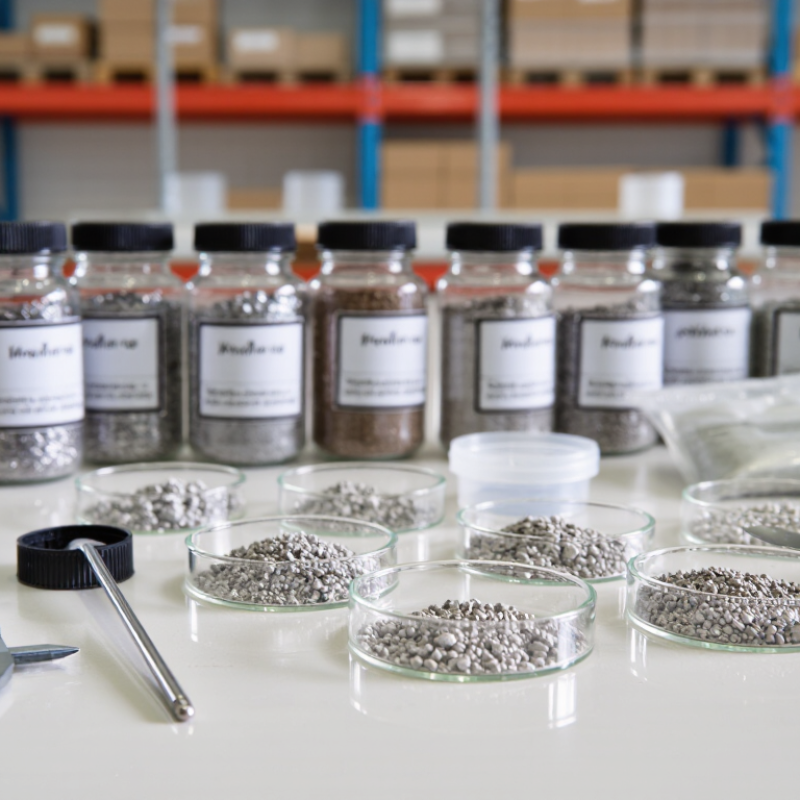
Understanding Fine Aluminum Powder and Its Global Applications
Fine aluminum powder consists of small aluminum particles whose size, shape, and surface condition affect how they flow and perform. Buyers encounter it in powder-based manufacturing, metallic coatings, and additive manufacturing, where consistent particle behavior can influence finished-part quality. Tiny differences matter. A batch that spreads unevenly may leave rough areas or defects in printed components. Particle specifications should therefore match the process, not just a supplier’s general product description.
The broader aluminum supply chain shows why dependable sourcing matters. The U.S. Geological Survey’s Mineral Commodity Summaries 2025 estimated global primary aluminum production at about 72 million metric tons in 2024. That figure describes metal production, not aluminum powder output, so it should not be mistaken for powder-market size. For global buyers, useful checks include particle-size distribution, chemistry documentation, packaging integrity, and batch traceability. Fine powders also require careful storage and handling because airborne dust can create workplace hazards. Specifications alone may not reveal how a powder behaves on a production line; a small qualification trial can expose problems that a datasheet misses.
| Buyer Evaluation Area | What to Check | Relevant Applications | Useful Verification |
|---|---|---|---|
| Particle size and distribution | Request the full particle-size distribution, including the measurement method. “Fine” does not have one universal particle-size cutoff; specifications vary by product and intended use. | Powder metallurgy, metal additive manufacturing, coatings, and other processes where particle size affects packing, flow, or surface finish. | Review a current test report. Laser diffraction is covered by ISO 13320; sieve analysis of metal powders is covered by ASTM B214. |
| Particle shape and morphology | Clarify whether the powder is spherical, irregular, or flake-shaped. Shape affects flow behavior, packing, surface coverage, and suitability for a process. | Spherical powders are commonly specified for powder-bed additive manufacturing; flake powders are used in some metallic-effect coatings and pigments. | Request representative microscopy images and a product specification describing the morphology and its acceptable variation. |
| Purity and chemical composition | Check the aluminum content and the limits for relevant impurities or alloying elements. Requirements depend on the application and applicable regulations. | Metal feedstock and powder metallurgy applications may require composition limits tailored to the final part or process. | Ask for a batch-specific certificate of analysis and confirm the analytical method and reporting units. |
| Flowability and apparent density | Assess whether the powder’s flow and packing characteristics are suitable for the buyer’s equipment and handling requirements. Results are method-dependent. | Powder feeding, die filling, and additive manufacturing processes that rely on consistent powder delivery. | ASTM B213 covers Hall flow rate testing, and ASTM B212 covers apparent density testing for free-flowing metal powders. |
| Surface condition and oxide | Ask how surface condition is characterized and whether any oxide or moisture limits apply to the specified grade. Do not assume results are comparable across different test methods. | Applications where surface chemistry, storage stability, or process consistency is specified by the end user. | Review the supplier’s specification, test methods, storage guidance, and batch documentation against the application requirements. |
| Application and grade fit | Match the powder grade to the intended process rather than selecting on particle size alone. Ask about process-specific trials and documented grade limits. | Metal additive manufacturing, powder metallurgy, metallic-effect coatings, and aluminum powder used as a pore-forming agent in some aerated-concrete production. | Confirm the intended application, required technical data, and any customer or jurisdiction-specific standards before purchase. |
| Packaging, transport, and handling | Confirm packaging integrity, traceability, storage conditions, transport classification, and the safety data sheet for the exact product. | All applications involving storage, transport, or processing of fine aluminum powder. | Fine aluminum powder can present combustible-dust and fire hazards. Follow the product safety data sheet and applicable local requirements; do not rely on generic handling assumptions. |
| Global supplier qualification | Compare suppliers using consistent specifications, sample evaluation, batch traceability, lead-time commitments, and export documentation. | Useful for buyers sourcing across borders for manufacturing, coatings, or other industrial uses. | Request a technical data sheet, safety data sheet, sample certificate of analysis, quality-system information, and written confirmation of the agreed specification. |