How to Choose the Right Pockels Cells for Your Application?
Pockels Cells are critical components in various optical applications, including lasers and telecommunications. According to a recent market report by ResearchAndMarkets, the global Pockels Cell market is projected to grow significantly, driven by increasing demand in industrial and scientific sectors. Their role in modulating light makes them invaluable for precise control in photonics.
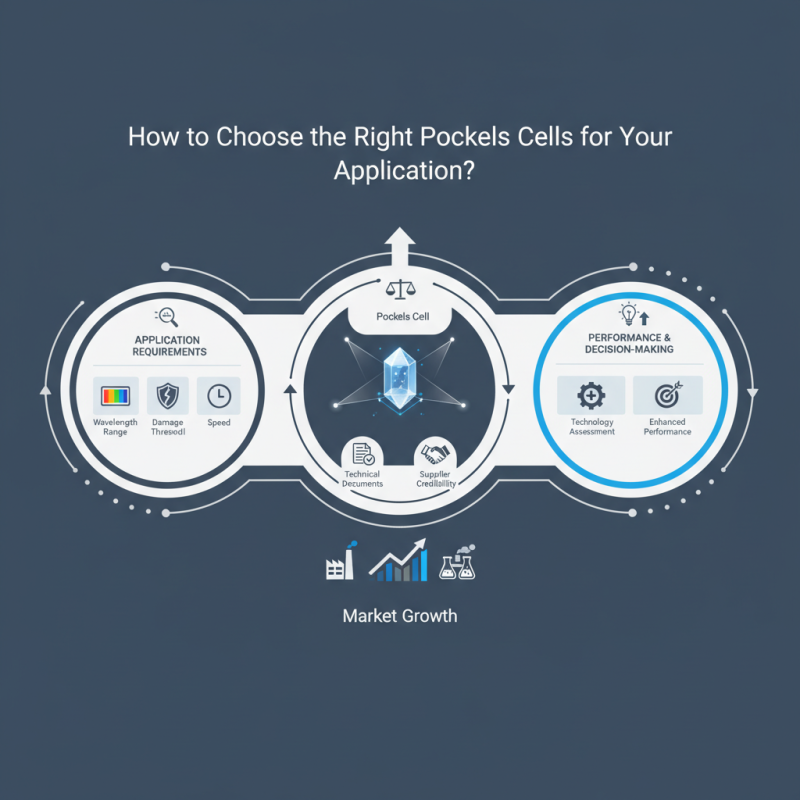
Selecting the right Pockels Cells can be daunting. The significant variations in design and specifications often lead to confusion. Factors such as wavelength range, damage threshold, and speed must be carefully considered. Even minor miscalculations can result in reduced efficiency, highlighting the importance of understanding the application requirements.
While many manufacturers offer Pockels Cells, quality can vary greatly among them. Reliable vendors provide detailed specifications and testing data to support their products. Therefore, users must evaluate both technical documents and supplier credibility. In this rapidly evolving field, ongoing assessment of needs and technology will enhance performance and lead to better decision-making.
Understanding Pockels Cells and Their Functionality
Pockels cells are essential components in various optical applications. They utilize the Pockels effect, which modifies the refractive index of certain materials when an electric field is applied. This unique property allows Pockels cells to control light polarization and intensity efficiently. They are widely used in laser technology, telecommunications, and scientific research.
Understanding their functionality is key to choosing the right cell for your needs. Different materials, sizes, and configurations can impact performance significantly. For instance, lithium niobate and potassium titanyl phosphate are common materials. Their properties vary, affecting how they respond to applied electric fields. Selecting the appropriate type may require some trial and error.
Performance might also include factors like response time and optical damage thresholds. These specifications can determine the cell's suitability for high-power laser applications. Delving into various aspects can reveal potential limitations or areas for improvement. Experimenting with different models can help identify the best option for your use case.
Key Factors in Selecting Pockels Cells for Specific Applications
When selecting Pockels cells, understanding specific application needs is crucial. These devices serve various purposes such as modulation, Q-switching, and pulse shaping. Each application presents unique challenges. For instance, the response time of the Pockels cell is vital for high-speed applications. Look for models that offer fast switching times to suit your requirements.
Another key factor is the wavelength of operation. Different materials respond best to specific wavelengths. For example, certain crystals perform optimally in the ultraviolet range, while others excel in the infrared spectrum. Consider your light source’s wavelength to avoid inefficiencies. Additionally, the crystal's damage threshold should not be overlooked. High-intensity applications demand durable materials to withstand intense light exposure.
Thermal management is another area to reflect upon. Pockels cells can be sensitive to temperature variations. Implementing a cooling system may be necessary for consistent performance. It's also wise to account for physical dimensions. Ensure that the chosen Pockels cell fits well within your current setup without causing alignment issues. Ultimately, a careful assessment of these factors will lead to better Pockels cell selection for your unique application.
Evaluating Performance Metrics of Pockels Cells
When selecting Pockels cells, evaluating their performance metrics is crucial. These devices are vital in various applications, especially in optics and photonics. Key metrics to consider include response time, damage threshold, and wavelength sensitivity. The ideal Pockels cell should meet specific application needs. For instance, short response times are essential for high-speed applications.
Analyzing the damage threshold is equally critical. It determines how much light the cell can handle without degrading performance. If your application involves intense lasers, choose cells with a higher threshold. Wavelength sensitivity is another vital factor. Different Pockels cells work better at specific wavelengths. A strong understanding of these properties can enhance your system's efficiency.
Some performance testing may reveal unexpected challenges. Testing can sometimes show that the desired specifications were not met. This could force a reevaluation of the decision-making criteria. It's essential to conduct thorough tests before finalizing your choice. Each application comes with its nuances. A deep dive into these metrics helps ensure that the chosen Pockels cell aligns with your needs.
Material and Design Considerations for Pockels Cells
When selecting the right Pockels cells, understanding the material and design elements is crucial. Common materials include Lithium Niobate (LiNbO3) and Potassium Titanyl Phosphate (KTP). Each has distinct electro-optic coefficients and thermal properties, influencing performance. Recent studies indicate that LiNbO3 boasts a high effective electro-optic coefficient of about 30 pm/V, making it favorable for high-performance applications.
Design considerations also play a vital role. The configuration of Pockels cells affects their efficiency and integration into systems. For example, polarization maintaining fibers benefit from design that minimizes optical loss. According to a report by the Optical Society, optimal design can enhance transmission efficiency by up to 25%. It's essential to consult a detailed analysis of the specific application's requirements and potential trade-offs.
Positioning and alignment are other critical factors. Misalignment can lead to performance degradation, highlighting the need for precision in installation. Additionally, design modifications may be necessary for compact systems, posing unique challenges. An engineer’s experience can be invaluable in navigating these complexities and achieving desired outcomes. Emphasizing both material selection and design nuances can make a significant difference in application success.
Common Applications of Pockels Cells in Industry and Research
Pockels cells are essential in various industries and research fields. These devices enable the modulation of light, making them invaluable in applications like laser technology and telecommunications. In laser systems, they often achieve precise pulse control. According to a report by the Laser Institute of America, the demand for laser applications has surged by over 15% annually.
In the realm of telecommunications, Pockels cells enhance signal quality and system efficiency. They are employed in optical switches and modulators. Industry statistics indicate that the global photonics market is projected to reach $1 trillion by 2025, highlighting the growing reliance on light-based technologies. This growth emphasizes the need for quality optical components, including Pockels cells.
Research institutions also use Pockels cells for experiments involving nonlinear optics. These cells enable studies in quantum optics and photonic technologies. However, challenges remain, such as maintaining stable performance under varying environmental conditions. It is crucial to evaluate the specific requirements of your application when selecting Pockels cells. Understanding the operational conditions and expected performance can lead to more effective results. It's vital to weigh the benefits against potential limitations.
How to Choose the Right Pockels Cells for Your Application?
| Application | Wavelength Range (nm) | Voltage (kV) | Optical Aperture (mm) | Typical Use |
| Laser Q-switching | 1064 | 2.0 | 20 | High-Peak Power Lasers |
| Electro-Optic Modulation | 800-1000 | 3.0 | 12 | Telecommunications |
| Pulse Shaping | 532 | 1.5 | 15 | Material Processing |
| Precision Timing | 400-700 | 2.5 | 10 | Scientific Research |
| Frequency Mixing | 1000-1600 | 4.0 | 25 | Nonlinear Optics |