Celebrating 45 Years of clinical innovation, comfort, and caregiver support at Broda.

Explore the Legacy!

How to Choose the Right Booster Seat for Your Child?

Choosing the right Booster Seat is not just about age or price. It is about fit: your child, your vehicle, and the seat must work together. Pediatrician and child passenger safety expert Dr. Benjamin Hoffman offers a useful principle: “The best car seat is the one that fits your child, fits your vehicle, and can be used correctly every time.” That last part matters on rushed school mornings, too.

Start by checking your child’s height and weight against the seat maker’s limits. Then look at how the vehicle belt sits. The lap belt should rest low across the upper thighs, while the shoulder belt crosses the chest and shoulder—not the neck or face. A seat that looks comfortable in a shop may sit differently in your back seat. Try it there, if possible. Small details count.

This guide explains booster types, fit checks, installation, and everyday use. It also covers when a child may be ready to move on, based on the seat and vehicle instructions. These decisions can feel less tidy than a checklist suggests; children grow unevenly, and belts vary between cars. Recheck the fit as your child changes. A quick look can reveal a belt slipping toward the stomach or shoulder. Don’t assume yesterday’s fit still works today.
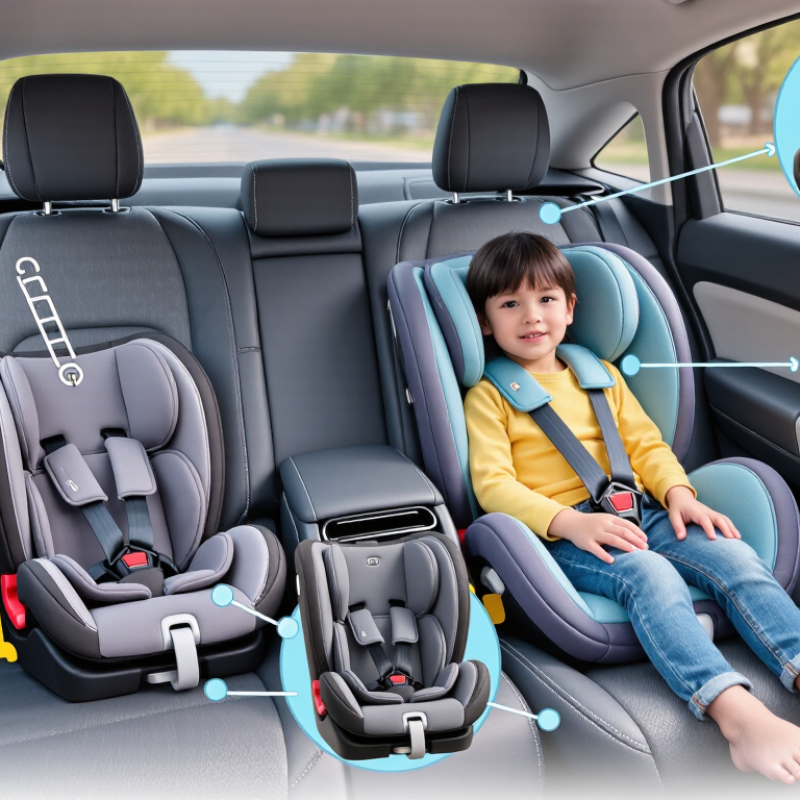
How to Choose the Right Booster Seat for Your Child?

Check Harness-Seat Limits First: NHTSA Advises Switching Only When Outgrown

How to Choose the Right Booster Seat for Your Child?

A booster seat is not automatically the next step when a child reaches a certain age. NHTSA advises keeping children in a forward-facing seat with a harness until they outgrow its height or weight limits. Check both limits in the seat manual; reaching either one means it is time to move on. A child may look tall enough while still fitting the harness. No rush. The right timing depends on the child and the specific seat, not a birthday alone.

Tips: Check the manual and the seat’s labels. In a booster, the lap belt should rest low across the upper thighs, while the shoulder belt crosses the chest and shoulder. It should not press against the neck or slip off the shoulder. The child should sit back with knees bending comfortably at the seat edge.

Try the fit in your vehicle before settling on a booster. Belt paths and back-seat shapes can change how the belt lies. If the belt does not stay in position, or your child leans forward or slouches, reassess the fit and setup. A booster works with a lap-and-shoulder belt, not a lap-only belt. These details can feel fussy, and sometimes the first seat you try is not the best match. Check the vehicle and seat instructions, and keep the child in the back seat.

Choose a Booster for Your Child’s Height, Weight, and Vehicle Seat

Choose a booster by your child’s current height and weight, not age alone. Check the seat’s stated limits and your vehicle manual before buying. A child who has outgrown a forward-facing harness may still need a booster to position the vehicle belt correctly. Fit matters more than appearance.

The lap belt should lie low across the hips, not the soft stomach. The shoulder belt should cross the middle of the chest and shoulder, never the neck or upper arm. In a 2009 study published in Pediatrics, booster seats were associated with a 45% lower risk of injury than seat belts alone for children ages four to eight. That statistic supports good belt fit, but it cannot predict how a particular child will fit in every vehicle.

Try the booster in the back seat. Check that it sits flat and does not wobble, and that the vehicle’s head restraint does not push it forward. A high-back model may help when the vehicle seat offers little head support; a backless model can work when the vehicle seat supports the child’s head. Have your child sit upright with knees bending naturally at the seat edge. Then check the belt path again. Small details count. Some children slump, even on short trips, so recheck fit as they grow.

Check Belt Fit: Lap Belt Low on Hips, Shoulder Belt Across the Chest

A booster seat helps position the vehicle’s seat belt over a child’s stronger bones. Check the fit with your child sitting upright, back against the vehicle seat, and knees bending naturally at its edge. The lap belt should rest low across the hips and upper thighs, not across the soft belly. Keep it low. A belt riding up can press into the abdomen during a sudden stop.

The shoulder belt should cross the middle of the chest and shoulder. It should not touch the neck, cut across the face, or slip off the shoulder. Never place it behind the child’s back or under an arm. That can change how the belt protects them. A quick glance may miss a poor fit, so ask your child to sit normally and check again after they move or lean. Children fidget; that matters.

Try the check in the vehicle where the booster will be used. Seat shape and belt anchor points can affect the fit. Follow the booster and vehicle instructions, and seek guidance from a qualified child passenger safety technician if the belt still sits awkwardly. It can feel fiddly, especially as a child grows. Recheck the fit from time to time, rather than assuming yesterday’s fit still works.

How to Choose the Right Booster Seat for Your Child? — Check Belt Fit: Lap Belt Low on Hips, Shoulder Belt Across the Chest
What to Check A Proper Fit Looks Like If It Does Not Fit
Lap belt position The lap belt sits low and snug across the hips and upper thighs. Use a suitable booster to raise the child so the belt rests on the upper thighs, not the soft abdomen.
Shoulder belt position The shoulder belt crosses the middle of the chest and shoulder. Choose a booster that positions the belt correctly. Never place the shoulder belt under the arm or behind the back.
Back against the vehicle seat The child can sit with their back against the vehicle seat while the belt stays correctly positioned. Check the booster’s fit and setup. A high-back booster may help when the vehicle seat lacks adequate head support.
Knees at the seat edge The child’s knees bend naturally at the edge of the vehicle seat without slouching. A booster may provide the height needed for a more comfortable position and better belt fit.
Staying seated correctly The child can remain upright with the lap and shoulder belts in the right positions for the whole trip. Continue using a booster until the child can maintain proper seat-belt fit without it.
Vehicle belt and seating position The seating position has both a lap belt and a shoulder belt, and the belt follows the booster’s instructions. Do not use a booster with a lap-only belt. Check the vehicle and booster manuals for approved seating positions and installation guidance.
Booster style and head support The booster fits the child and vehicle. The child’s head is supported by the booster or the vehicle seat and head restraint, as applicable. Consider a high-back booster if additional head and upper-body support is needed; follow the booster and vehicle manuals.
When to move on from a booster The adult seat belt fits properly in that vehicle seat without a booster, and the child can maintain that fit throughout the ride. Keep using the booster if any part of the belt-fit check is not met. Fit can differ between vehicles.
Back-seat safety The child rides in the back seat, which is generally the safest place for children. Follow vehicle instructions and local child-passenger safety laws; children should generally ride in the back until at least age 13.
Helpful reminder: Height alone does not determine whether a child is ready to stop using a booster. Around 4 ft 9 in (145 cm) is a common guideline, but always check the seat-belt fit in the specific vehicle and follow the booster and vehicle manuals.

Verify Booster Labels Meet U.S. FMVSS No. 213 Requirements

Before choosing a booster, check its label for a statement that it conforms to all applicable U.S. Federal Motor Vehicle Safety Standards. FMVSS No. 213 covers child restraint systems, including booster seats, and sets performance and labeling requirements. The label is an important starting point, not proof that every seat will fit every child or vehicle. Small print matters.

Read the seat’s height and weight limits, manufacture date, model information, and instructions. Confirm that the lap belt rests low across your child’s upper thighs and the shoulder belt crosses the chest, not the neck or face. A quick check in your parked car can reveal fit problems that a product description cannot. Children should use a booster until the vehicle belt fits properly without it.

The CDC reports that 711 children aged 12 and younger died in U.S. motor vehicle crashes in 2021; more than one-third were not buckled up. That figure underscores the value of correct restraint use, but a compliant label alone cannot prevent misuse. Labels can be easy to overlook, and instructions may take patience to interpret. Recheck them as your child grows.

Use a Booster Until the Belt Fits: AAP Cites 4 ft 9 in as a Common Milestone

How to Choose the Right Booster Seat for Your Child?

A booster seat helps position a vehicle’s adult seat belt across a child’s stronger bones. The American Academy of Pediatrics (AAP) notes that 4 feet 9 inches is a common milestone for outgrowing a booster. It is not a guarantee of good belt fit. Children grow at different rates, and a child may still need a booster at that height in some vehicles.

Check the fit in the car your child rides in most. The lap belt should rest low across the hips and upper thighs, not the stomach. The shoulder belt should cross the middle of the chest and shoulder, not the neck or face. Your child should sit back with knees bending naturally at the seat edge. If they slump or move the belt aside, keep using a booster. It can be tempting to move on too soon. That is worth reconsidering.

Tips: Try the belt fit before each transition, especially after a growth spurt or when changing cars. Follow the booster and vehicle instructions, and keep children in the back seat through age 12 when possible. Check again. A small fit difference matters.