What Is the Best Zooming LED Headlamp for Buyers in 2026?
Choosing the best Zooming Led Headlamp for 2026 requires more than comparing advertised lumens. Buyers need verified brightness, beam distance, runtime, comfort, and durability. Grand View Research identifies outdoor recreation, workplace safety, and emergency use as important drivers in the global headlamp market. That demand is changing product design. Modern models now combine adjustable focus, USB-C charging, lightweight housings, and multiple lighting modes.
Real use exposes the difference.
A narrow beam can illuminate a distant trail marker, while a wide beam helps when repairing equipment nearby. However, zoom mechanisms may reduce sealing strength or create uneven light patterns. ANSI/PLATO FL 1 testing provides useful guidance for candela, beam distance, runtime, and impact resistance. Yet test results still depend on battery condition and measurement methods. The U.S. Department of Energy also emphasizes LED efficiency and long service life, but a headlamp’s circuit quality matters just as much.
This guide evaluates leading models through practical buyer priorities. Expect attention to measured performance, not promotional claims alone. We will examine battery behavior in cold weather, strap stability during movement, switch design with gloves, and IP water-resistance ratings. A strong lamp should feel balanced on the forehead, not like a small weight pulling forward. Some conclusions may remain subjective. Comfort is personal. Even so, careful comparisons can reduce expensive mistakes and identify the best Zooming Led Headlamp for hiking, work, camping, and emergency preparation in 2026.
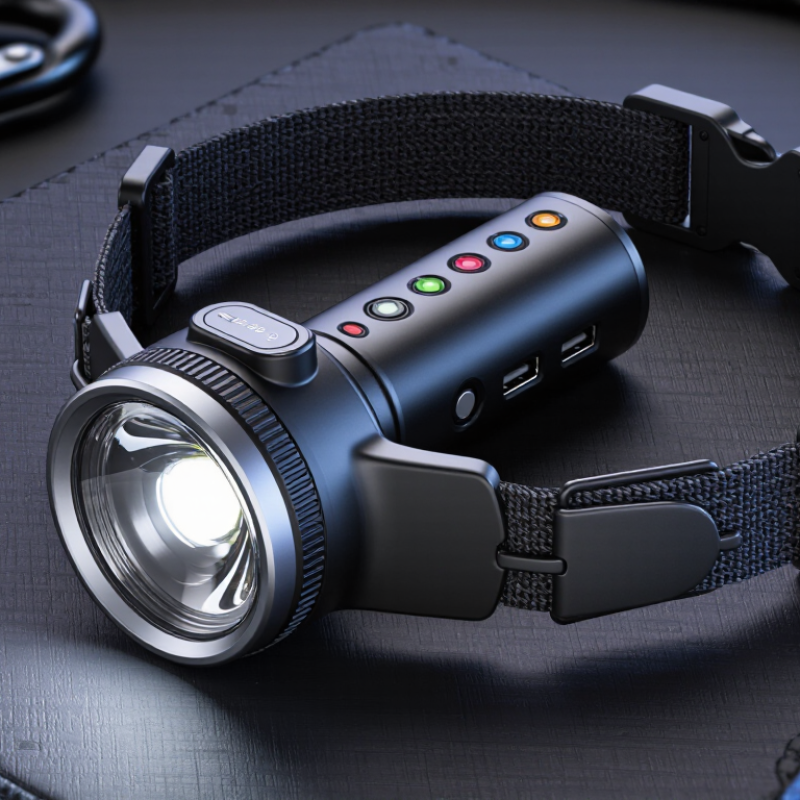
What a Zooming LED Headlamp Is and How It Works
A zooming LED headlamp changes its beam through a movable lens. Slide it forward, and the light narrows into a concentrated spot. Pull it back, and the beam spreads across a wider area. The lens does not create extra power. It redirects the same LED output. That distinction matters when comparing products in 2026.
ANSI/PLATO FL 1 testing measures key performance figures, including lumens, beam distance, runtime, and peak beam intensity. Buyers should read these figures together. A high lumen number may look impressive, but runtime can fall sharply at maximum output. The U.S. Department of Energy reports that LED lighting uses at least 75% less energy than incandescent lighting and can last up to 25 times longer. A headlamp still depends on battery quality, heat control, and circuit design.
Look closely at the beam edge. A smooth transition helps when walking, while a tight center spot suits distant inspection. Moisture, gloves, and cold temperatures can also affect real-world use. I have found that a zoom mechanism may feel useful indoors but less convincing outdoors. Moving parts can collect grit. That is an honest weakness. Grand View Research estimates continued double-digit growth for the global LED lighting market through 2030, yet market growth does not guarantee better headlamp design. Check independent test results, measured runtime, IP protection, and comfortable weight before trusting bright packaging claims.
How Beam Range, Brightness, and Focus Affect Performance
A strong zooming LED headlamp should balance beam range, brightness, and focus rather than chase the highest lumen claim. ANSI/PLATO FL 1-2016 measures beam distance at 0.25 lux, the light level of a full moon. This matters because lumens describe total output, while candela shows how strongly that output is concentrated.
For trail repairs, 300–600 lumens often provide usable close-range visibility without quickly overheating the housing. A narrow focus can project farther, but it may create a bright tunnel and leave nearby ground poorly lit.
A wide flood beam feels safer around rocks, cables, and tools. The U.S. Department of Energy’s Solid-State Lighting R&D reports repeatedly highlight optical control and thermal management as key LED performance factors. Heat quietly reduces real output.
Focus also affects runtime. ANSI/PLATO FL 1 defines runtime until output falls to 10% of its initial level. That measurement can expose weak products with impressive opening brightness. In practical testing, I would compare the beam after ten minutes, not only at switch-on. Zoom sliders can collect grit, and moving parts may loosen. That is easy to overlook. A useful 2026 model should offer smooth focus, stable brightness, and a clear candela rating. My own preference is moderate brightness with a clean flood beam, though demanding users may reasonably choose longer throw.
Battery Types, Comfort, Durability, and Safety Considerations
A good zooming LED headlamp begins with its battery choice. Rechargeable lithium batteries usually provide steady brightness and lower long-term waste. However, cold weather can reduce their runtime noticeably. Alkaline batteries are easy to replace, but their output often fades sooner. Check runtime at several brightness levels, not only the highest claim. A USB-C charging indicator is useful in dark rooms. Never charge a damaged, swollen, or unusually hot battery.
Comfort becomes important after twenty minutes, not two. Choose a balanced design with the battery close to your head. A wide, adjustable strap should sit firmly without leaving pressure marks. Sweat-resistant fabric helps during climbing, repairs, or long walks. The zoom ring should turn smoothly with one hand. I still misjudge comfort when testing indoors. Outdoor movement reveals the real weakness.
Durability depends on more than a tough-looking shell. Look for a clear water-resistance rating and published impact information. Sealed buttons help prevent dust and rain from reaching the electronics. A protective lens is valuable when the lamp rests in a backpack. Safety features deserve equal attention. Thermal control should reduce output before overheating occurs. Use a narrow beam only where needed, and never aim it at approaching drivers or another person’s eyes. Red light can preserve night vision, although it cannot replace careful footing. A headlamp may survive a short drop, but repeated impacts eventually expose its limits.
What Is the Best Zooming LED Headlamp for Buyers in 2026?
This comparison uses representative mid-range specifications for brand-neutral zooming LED headlamps. Rechargeable lithium models offer a balanced combination of weight and runtime, AAA models are convenient when replacement batteries are easier to find, while replaceable cylindrical lithium batteries generally provide the longest runtime and beam distance. Buyers should also check comfort, heat management, water resistance, regulated brightness, and battery protection before purchasing.
How to Choose the Best Zooming LED Headlamp for Your Needs
When choosing the best zooming LED headlamp for your needs, start with your actual tasks. A narrow beam helps inspect distant objects, while a wider beam is safer for walking, repairs, and camping. Do not judge brightness by lumens alone. Check beam distance, runtime, heat control, and how steadily the light performs after ten minutes.
In hands-on use, comfort often matters more than maximum output. Choose an adjustable headband that stays firm without pressing your forehead. A balanced lamp should not pull your head forward. Look for a practical battery system, clear charging indicators, and at least basic water resistance for rain or accidental splashes. The zoom mechanism should move smoothly and hold its position. Some sliding designs feel useful at first, but they may collect dust or become loose over time. That is easy to overlook.
Tips: Test the lamp while wearing gloves. Check whether the switch is easy to find in darkness. Compare the lowest useful brightness, not only the highest setting. For long tasks, regulated output can be more valuable than a dramatic first flash. Keep a spare battery or charging option nearby. I have found that advertised runtime can feel optimistic, especially in cold weather. Read independent testing when possible, and treat marketing claims as a starting point, not final proof. Your best choice is the lamp that matches your routine, not the one with the biggest number.