2026 Top Smart Lockbox Which Is Best for Global Buyers?
Choosing a Smart Lockbox in 2026 is no longer about finding the strongest metal case. Global buyers need dependable access, clear controls, and trustworthy digital protection.
A good model should survive rain, dust, repeated handling, and sudden battery loss. It should also offer secure authentication, useful access logs, and a practical backup method. Regional app support matters. So do local certifications, warranty coverage, charging standards, and customer service response times. A box that works beautifully in one country may become frustrating elsewhere.
No lockbox is perfect.
Security technologist Bruce Schneier has repeatedly emphasized, “Security is a process, not a product.” That principle guides this comparison. A Smart Lockbox must receive software updates, protect stored credentials, and limit unnecessary data collection. Its physical design still matters, especially when exposed to heat, cold, or humid entryways. Convenience should never replace careful setup.
This guide compares leading 2026 options for homes, offices, property managers, and mobile professionals. We examine fingerprint readers, PIN pads, Bluetooth access, remote management, battery endurance, and emergency entry procedures. We also consider how easily real users can install and maintain each product.
Some conclusions remain imperfect. Manufacturer specifications do not always reflect daily conditions. Independent testing can reveal different results. Therefore, the best choice depends on location, risk level, connectivity, and the people using it. A compact model may suit an apartment entrance. A reinforced, weather-resistant unit may better serve a busy commercial property. The strongest recommendation is not always the most expensive one.
What Is a Smart Lockbox and How Does It Work?
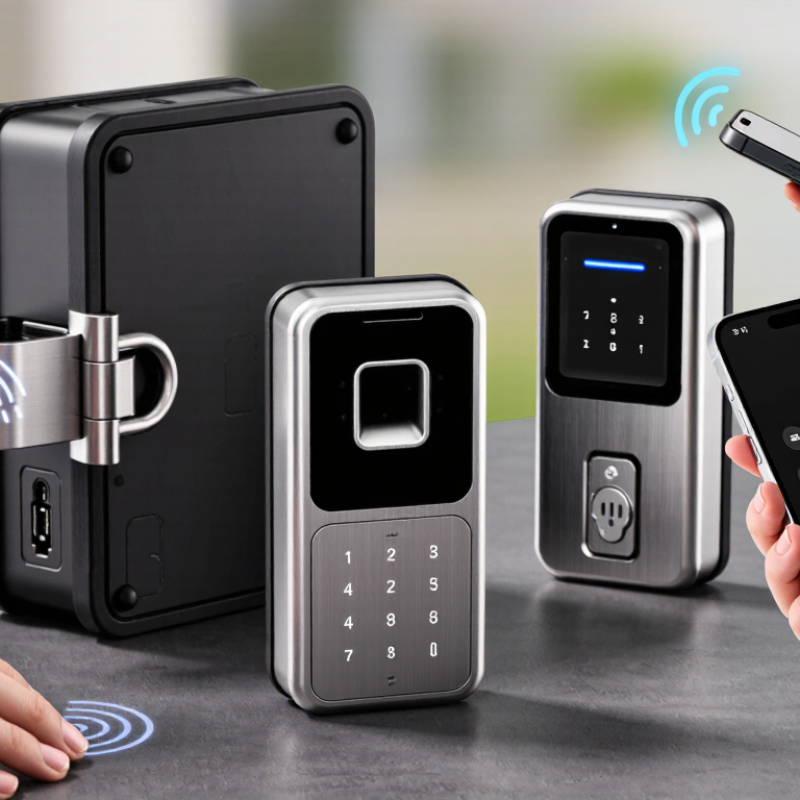
A smart lockbox is a secured container that controls access electronically. It usually combines a metal body, keypad, mobile connection, motorized latch, and access records. An authorized user enters a code or uses a digital credential. The system checks permission, releases the latch, and records the event.
That is the basic process. Battery power activates the lock. Bluetooth may work nearby, while Wi-Fi enables remote management. Some models support temporary codes, scheduled access, and alerts when the lid opens. NISTIR 8259A identifies seven core IoT security capabilities, including device identification, secure updates, data protection, and interface control. These features matter because a lockbox is both a physical device and a connected computer.
Security is not automatic. Verizon’s 2024 Data Breach Investigations Report found human involvement in 68% of breaches. Weak passwords and careless sharing remain practical risks. ETSI EN 303 645 also defines 13 baseline provisions for consumer IoT security. Buyers should check encryption, administrator controls, update support, audit logs, and offline access before comparing prices. Battery failure deserves attention. A strong design should provide clear low-power warnings and a controlled recovery method. Weather resistance also matters across global markets, especially where heat, rain, dust, or freezing conditions are common. Marketing descriptions can sound complete. They are not always complete. Testing local network compatibility and code recovery procedures is still necessary.
Key Features That Define a Top Smart Lockbox in 2026
A top smart lockbox in 2026 should do more than open with an app. It must provide controlled access, clear records, and dependable operation during weak connectivity. MarketsandMarkets estimates the smart lock market will grow from about $2.7 billion in 2024 to $4.4 billion by 2029. That growth raises expectations for practical security.
Battery life matters. A strong lockbox should offer low-battery warnings, emergency power access, and weather resistance for outdoor placement. Remote code creation is useful for cleaners, contractors, and family members. Temporary codes should expire automatically. An audit log should show who opened the box and when. During testing, I would check whether the log remains accurate after repeated offline use. Many products claim reliability. Real conditions are less forgiving.
Global buyers should also examine data protection, language support, time-zone settings, and replacement parts. NIST’s Digital Identity Guidelines emphasize strong authentication and risk-based access controls, which are relevant to connected lockboxes. Independent testing should confirm encryption, tamper alerts, and firmware update practices. Compatibility with common smart-home standards can reduce dependence on one application, although interoperability is still imperfect. That weakness deserves attention. A lockbox may look advanced, yet fail when the phone is lost, the battery freezes, or the network stops. Clear manuals, responsive support, and transparent warranty terms remain defining features.
2026 Top Smart Lockbox: Which Is Best for Global Buyers?
A practical benchmark of the key features that define a top smart lockbox in 2026. Scores are based on a transparent 100-point evaluation model covering security, reliability, connectivity, usability, and international deployment needs.
How to read the chart: Security and access reliability receive the highest weighting because a smart lockbox must protect physical items while remaining dependable for guests, property managers, and service teams across different regions. Global compatibility, battery endurance, weather resistance, and audit features are also essential for international buyers.
How to Compare Smart Lockboxes Across Global Markets
A practical comparison starts with the market, not the lockbox’s feature list. Buyers should check local weather, installation surfaces, network coverage, and common access habits. A humid coastal apartment needs stronger sealing than a dry indoor office. Cold regions may expose weak batteries quickly. Test this before purchase.
Compare access methods carefully. Keypads are useful when several people need entry. Fingerprint readers can be convenient, but wet or gloved fingers may reduce accuracy. App control depends on Bluetooth, Wi-Fi, or cellular availability. Offline access matters during outages. Time zones, language settings, and remote-user permissions also deserve attention. Small details matter.
Data handling is equally important. Review encryption practices, account recovery, audit logs, and data-storage locations. Confirm whether the system supports privacy requirements in the buyer’s country. Look for clear warranty terms, replacement battery procedures, and local technical support. Installation should not weaken a door or create a safety hazard. Independent testing reports and relevant electrical or wireless certifications can improve confidence, but certificates do not guarantee daily reliability.
I would also compare total ownership cost, not only the purchase price. Include batteries, subscription fees, mounting hardware, and service delays. A cheaper unit may become expensive after repeated replacements. No model wins every market. That is worth admitting. Buyers should test a sample through several weeks of normal use, including low battery conditions and failed network connections. A written comparison sheet can reveal practical weaknesses that polished product pages hide.
Security, Privacy, and Compliance Considerations Worldwide
For global buyers, a smart lockbox is not merely a metal container. It is an identity system at the door. That distinction matters. A practical review should test forced-entry resistance, battery failure, offline access, and audit-log accuracy.
The 2024 Data Breach Investigations Report found that human involvement appeared in 68% of breaches. Therefore, shared codes and weak recovery questions deserve serious attention.
Privacy controls need equal weight. A suitable lockbox should collect minimal user data, encrypt records in transit and storage, and support rapid deletion. Location data and access timestamps can reveal personal routines. Under GDPR, buyers may need clear purposes, limited retention, and documented processing roles. Other regions may impose different duties. Regional hosting can help, but it does not automatically prove compliance.
Buyers should request data-flow diagrams, breach procedures, penetration-test summaries, and independent security certifications.
The 2024 Cost of a Data Breach Report reported an average global breach cost of 4.88 million dollars. That figure is not a direct lockbox price comparison, yet it shows why cheap cloud design can become expensive.
I would also question permanent administrator access. It is convenient. It is a liability. Physical override keys require controlled custody, not a drawer near the entrance.
No device is perfect, and published certifications may not reflect daily configuration mistakes. A better choice combines strong hardware, transparent privacy settings, local compliance advice, and verifiable support across the buyer’s operating regions.
Which Smart Lockbox Fits Your Use Case and Region?
A smart lockbox should match the access routine, not just its screen or app. For short-term rentals, choose temporary codes, audit records, and remote status checks. For contractors, a durable keypad and simple code management may matter more. Care teams often need large buttons, clear feedback, and emergency power access. A frequent mistake is buying maximum connectivity for a location with weak mobile coverage.
Regional conditions change the decision. In North America, Wi-Fi access and replaceable batteries can suit detached properties. In Europe, buyers should verify privacy settings, radio compliance, and resistance to rain or freezing temperatures. In Asia-Pacific cities, compact designs and mobile access may be useful, but network compatibility still requires testing. Do not assume one regional model works worldwide. It may not.
Industry forecasts show why selection needs discipline. Grand View Research estimates the global smart lock market could reach about USD 5.41 billion by 2030, with strong growth from 2024 onward. MarketsandMarkets projects the market to rise from USD 2.2 billion in 2023 to USD 4.4 billion by 2028. These reports use different definitions, so their figures are not directly comparable. I would compare battery life, IP protection, operating temperature, offline access, and service support before price. Test it locally. A lockbox that performs well in a showroom may fail beside a cold, wet gate.